

New figures show a big spike in some cars being scrapped due to a massive tax trap which is seeing owners facing charges of almost what their much-loved car is worth. Some people will be paying almost £800 a year in tax from April 6 after further Vehicle Excise Duty rises.
The cars concerned are those which are older than 20 years - but they have to get to 40 to be considered ‘classics’ and be tax exempt. But because these cars are now worth very little - often under £1,500 - the annual tax bill can represent 25-50% of the car’s total value and people are getting them scrapped.
New figures collated by car sales and purchase company Car.co.uk have show certain types of car have seen the number being scrapped soaring. Some of the most desirable cars from 20 years ago are now virtually worthless and being scrapped because it costs too much to tax them. It means that cars which produce more than 225g of CO2 emissions per kilometre are hit by Vehicle Excise Duty (VED) - with those producing 201-225g/km paying £430, 226-255g/km £735 and over 255g/km £750. And the bands are set to rise with the £735 going up to £760 and the £750 over 255g/km expected to hit £790 from April 2026.
Experts at Car.co.uk have analysed their internal scrap data on these popular models from VED bands L and M, revealing huge increases in vehicles heading to the scrap yard.
2024 vs 2025 scrappage spikes for models hit by April road tax changes
Model // Percentage change between 2024 and 2025 (%)
- Land Rover Freelander 2 i6 +550.0%
- Subaru Forester 2.5 XT +166.7%
- Volkswagen Golf R32 +125.0%
- Vauxhall Zafira VXR +50.0%
Car.co.uk’s internal data reveals that cars hit by high road tax are getting scrapped more and more in the UK. The findings show that the Land Rover Freelander emerged as the UK’s fastest-rising model from the list that headed to the scrapyard in 2025. Between 2024 and 2025, scrappage increased by 550%.
Q4 2025 vs Q1 2026 scrappage spikes
Model // Percentage change between Q4 2025 and Q1 2026 (%)
- VW Golf R32 +323.1%
- Land Rover Freelander 2 i6 +233.3%
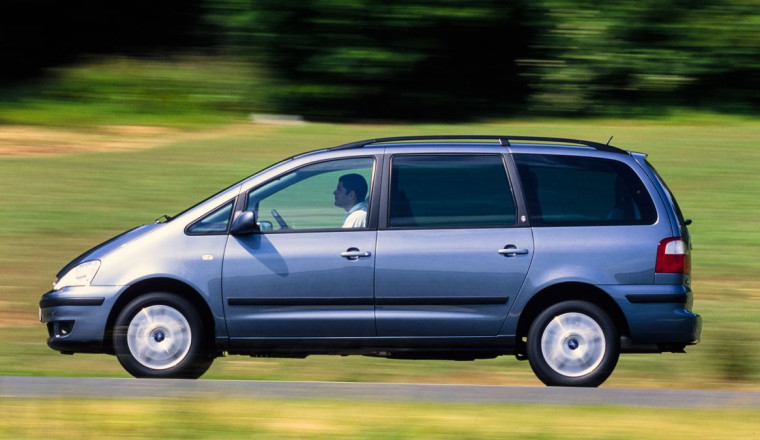
- Ford Galaxy 2.3 +130.8%
- Jaguar X-Type 2.0 Auto +31.6%
- Audi TT 1.8T +17.6%
Looking at more recent data comparing Q4 of last year with Q1 of this year tells a similar story: as the April VED deadline approaches, a growing number of these vehicles are being sent to the scrap yard. Car.co.uk’s report shows that scrap quotes for the VW Golf have risen by 323% since the final quarter of 2025, with the Land Rover Freelander close behind with an increase of 233%.
William Fletcher MBE, CEO of Car.co.uk, said “Many of these cars, from family staples like the Ford Galaxy and Vauxhall Zafira to sportier models like the Volkswagen Golf R32, are now worth less than their annual tax bill. It’s hard to believe, but these models are being taxed on UK roads at the same rate as luxury sports cars worth 100x their value.
“For many households that require affordable and family-sized cars like the Galaxy, April’s road tax changes present a massive problem. Right now, amid the UK’s affordability crisis, many families in the UK are simply trying to make ends meet, so paying hundreds in road tax on an ageing vehicle is simply unviable and makes no financial sense.
“Models like the Land Rover Freelander tend to hold perceived utility value longer, meaning owners only scrap when costs suddenly stack up, such as taxes. So, with annual road tax rising to £760, we expect to see Freelander scrap quotes increase even further in Q2 and Q3.
“In general, scrap quotes have already greatly increased for many older models at risk of high taxes this year. But come the second quarter of 2026, we expect an even more significant increase in scrappage as car owners face the reality of their new car costs. Many won’t know quite how badly April’s road tax will affect them yet. As soon as they get the bill through, scrappage will be the only viable option.”
UK cars heading to the scrapyard amid April road tax changes
10 popular models hit hardest by VED ‘tax trap’
Model Annual road tax rate
- Audi TT 1.8T £735
- Chrysler PT Cruiser £735
- Ford Galaxy 2.3 £735
- Ford Mondeo V6 £735
- Jaguar X-Type 2.0-litre Auto £735
- Land Rover Freelander 2 i6 £760
- Saab 900 Convertible £735
- Subaru Forester 2.5 XT £735
- Vauxhall Zafira VXR £735
- Volkswagen Golf R32 £760
Scientists have calculated that it’s far more environmentally friendly to keep an older vehicle on the road than for someone to scrap their car and buy a newly-built one. The Guardian reported that producing a medium-sized new car may generate more than 17 tonnes of CO2 – almost as much as three years’ worth of gas and electricity in the typical UK home.
Mike Berners-Lee and Duncan Clark wrote: “With this in mind, unless you do very high mileage or have a real gas-guzzler, it generally makes sense to keep your old car for as long as it is reliable – and to look after it carefully to extend its life as long as possible. If you make a car last to 200,000 miles rather than 100,000, then the emissions for each mile the car does in its lifetime may drop by as much as 50%, as a result of getting more distance out of the initial manufacturing emissions.”
Expected new 2026-2027 car tax rates for vehicles registered between March 1, 2001, and April 1, 2017
- Up to 100g/km - Remains at £20
- Between 101 and 110g/km - Remains at £20
- Between 111 and 120g/km - Remains at £35
- Between 121 and 130g/km - Rising from £165 to £170
- Between 131 and 140g/km - Rising from £195 to £200
- Between 141 and 150g/km - Rising from £215 to £225
- Between 151 and 165g/km - Rising from £265 to £275
- Between 166 and 175g/km - Rising from £315 to £325
- Between 176 and 185g/km - Rising from £345 to £360
- Between 186 and 200g/km - Rising from £395 to £410
- Between 201 and 225g/km - Rising from £430 to £445
- Between 226 and 255g/km - Rising from £735 to £760
- Over 255g/km - Rising from £750 to £790
A petition on the parliament website has now reached almost 50,000 signatures calling for the government to reduce Vehicle Excise Duty by 50% for vehicles aged 20 to 39 years. If it reaches 100,000 backers it will prompt a Commons debate, putting pressure on the Chancellor Rachel Reeves to make changes.
Because the petition reached 10,000 signups the Treasury has responded with a statement. It said: “The Government has no plans to reduce Vehicle Excise Duty liabilities for vehicles aged 20 to 39 years. The Government keeps all taxes under review and the Chancellor makes decisions at fiscal events.
“Revenue from motoring taxes helps ensure we can continue to fund the vital public services and infrastructure that people and families across the UK expect. For example, by 2029/30, the government will commit over £2 billion annually for local authorities to repair, renew and fix potholes on their roads – doubling funding since coming into office. This record level of funding will enable the government to exceed its manifesto commitment to fix an additional 1 million potholes per year by the end of the Parliament.”
To read the petition, sign up and view the full Treasury response, click here.