Happy Wednesday! It's March 11, 2026, and this is The Morning Shift — your daily roundup of the top automotive headlines from around the world, in one place. This is where you'll find the most important stories that are shaping the way Americans drive and get around.
In this morning's edition, we're looking at why new cars are so expensive, and how many of them are sitting around dealer lots. We'll also look at how new car sales are going in China, and how much worse than the average Porsche is doing.
 Around the World Photos/Shutterstock
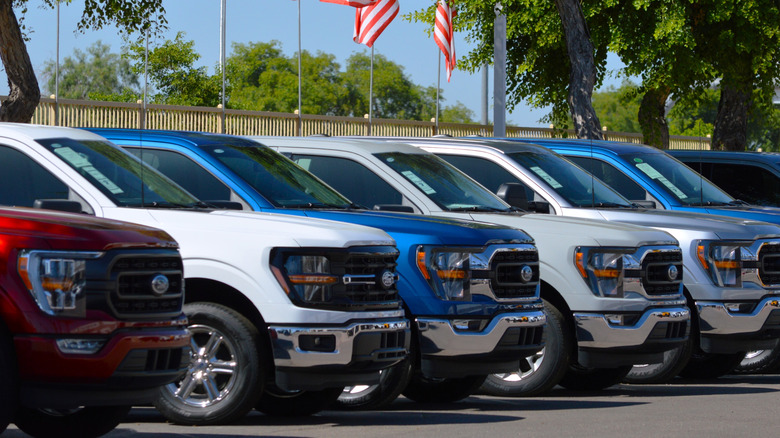
Increasingly, the few richest people on earth drive consumer spending. Consumer spending is the tail that wags the dog of industry, so companies — like carmakers — are building fancier and more expensive vehicles to suit those tastes. The result? Pricier cars on dealer lots. From Reuters:
The U.S. car business is grappling with a stubborn affordability problem, one that threatens to relegate more Americans to the used-car lot and leave automakers vulnerable to lower-priced rivals.
Lawmakers have framed the issue around partisan lines. U.S. President Donald Trump and other Republicans blame environmental and safety regulations. Democrats blame Trump's tariffs.
But a Reuters review of industry sales data found a more market-based reason: Automakers are offering relatively few budget models, while they've filled showrooms with bigger, more upscale models, raising the selling price of the average U.S. vehicle to around $47,000. The trend toward fancier vehicles on the new-car lot is a stark example of the so-called K-shaped U.S. economy: More affluent consumers are driving a larger share of spending, while middle- and lower-income people struggle.
This of course means that the brokest Americans will stop buying new cars, being permanently pushed into the used market. That will further degrade demand for new base models, which will further incentivize companies to only make the expensive stuff. You see the cycle here.
 Marina113/Getty Images
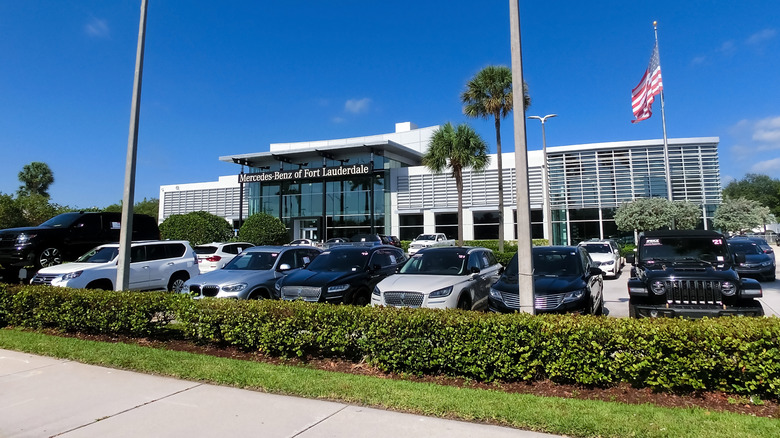
Dealers like to measure the supply of vehicles on their lots not in numbers of cars, but in days. How many days of inventory do they have, how many days or a single brand. Now, dealers are looking at 75-day supplies of new cars backed up on their lots — and that number seems to be growing. From Automotive News:
U.S. new-vehicle inventory rose in February to 3.02 million, giving dealers a 75-day supply of vehicles to start the spring selling season, even as the average days-on-lot grew.
Inventory levels were almost exactly where they stood at the same point a year earlier, according to an estimate by Lotlinx. However, a slower selling rate has pushed the days' supply measurement up by 10, the company said.
The average age of vehicles in inventory varied by price, Lotlinx noted, with vehicles $30,000 to $50,000 sitting unsold for 73 days, while those priced above $80,000 were in inventory for an average of 80 days.
The interesting tidbit here is that the actual number of cars on dealer lots isn't changing much. Instead, demand is dropping, which means the same number of cars will last dealers a longer time. This certainly isn't a bad sign for the economy in any way.
 Lewistsepuilung/Getty Images
Car sales in China dropped off a cliff in February, but it's not all as bad as it sounds. Some of that dip happens every year around the Lunar New Year, but more of it has to do with the Chinese government ending some of its new-car subsidies. From Bloomberg:
China's vehicle deliveries fell 15% in February, as the phasing out of government subsidies worsened the usual Lunar New Year holiday slump.
Vehicle wholesales dropped to about 1.8 million units last month, data from the China Association of Automobile Manufacturers released Wednesday showed. Deliveries of electric cars and plug-in hybrids fell 14% to about 765,000 units, a further sign that demand for new-energy cars is cooling.
While domestic demand remains soft, exports surged 52% in February, the data showed. BYD Co. is making inroads into markets like South America and the UK, while Geely Automobile Holdings Ltd. entered 13 new markets last year, including Brazil and South Africa.
It's no wonder Chinese automakers are so hungry to break into other markets — right now, BYD's aggressive expansion is likely what's keeping its numbers on the up and up.
 ad-foto/Shutterstock
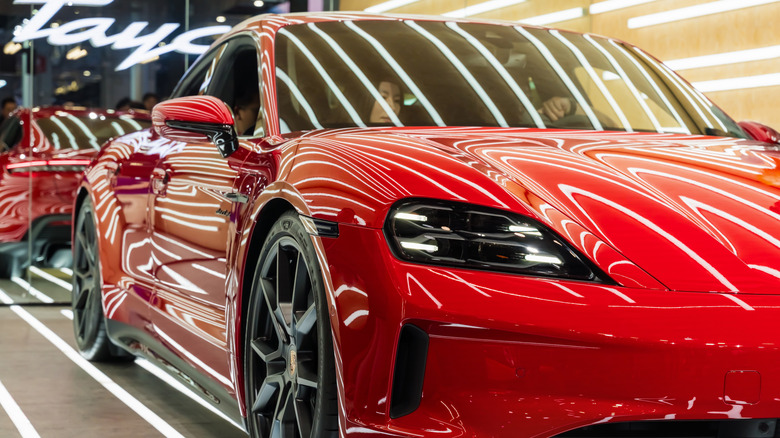
Porsche has its image, a sporty automaker that will get you around a track without conceding anything on the luxury or comfort fronts. Unfortunately for the brand, it's tough to tell people that you are, in fact, fashionable — and now Chinese consumer tastes are veering away from Porsche. From Bloomberg:
For decades, the deep-throated growl of a Porsche AG sports car was a sought after status symbol for China's newly rich. Lately, though, it has lost that mantle to a new breed of whisper-quiet, home-grown electric cars.
Once the automaker's crown jewel, China sales slumped 26% in 2025 — more than double the rate of its global decline — and have more than halved from their 2021 peak to just under 42,000 last year, falling below the US and Germany to its No. 3 market. The slide continued into this year, with January deliveries down around 33% from a year earlier, according to data compiled by Bloomberg Intelligence and China Automotive Technology and Research Center.
For Porsche, the stakes couldn't be higher. It's fading fortunes in the world's largest auto market go beyond just a cyclical downturn, and fit a broader shift in consumer tastes where European heritage, quality and design have decoupled from Chinese aspiration. Just as a home-grown tech-forward EV is seen as the new hallmark of luxury, local clothing, beauty and jewelry brands are gaining popularity over global top-end stalwarts like Gucci, Chanel and Dior.
China is realizing it's better at making things than many other countries on earth — there's a reason we all use Chinese-built phones and laptops and clothes. Now, it seems that's a source of pride over there, and it's hurting the Europeans who bank on luxury associations.
The world stopped turning in March of 2020, and I'm still not convinced it ever restarted. Time since then doesn't seem to count
 AAA
AAA
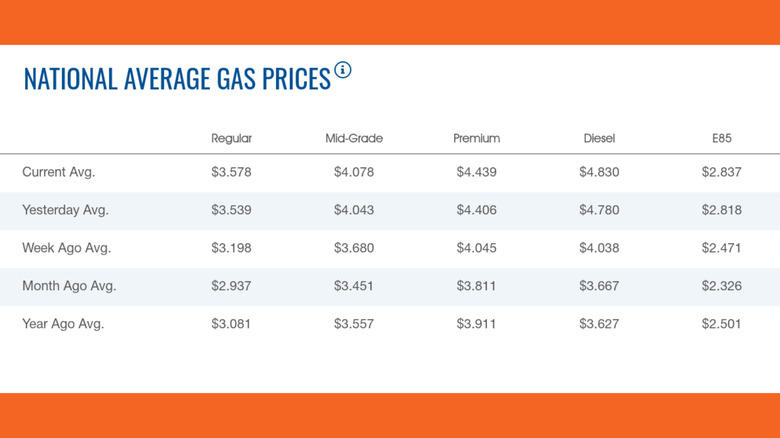
The price of an oil barrel is comfortably under $100, but fuel prices just keep rising. Now, a spokesperson for Iran's military is telling the United States to "Get ready for $200" barrels, which will be Very Bad if we get there. Time to get really into bicycling.
It's beautiful out in Brooklyn, which means it's time to listen to early-20teens summer jams. This one in particular is a great example for The White Stripes. See, you can be in a band with your significant other and not pretend to be siblings.