

By CRYSTAL OWEN
Almost exactly two years ago, my son Harvey was about to turn 17. We were planning to celebrate with a family meal in a local restaurant and his favourite chocolate brownies.
Always the boy most likely to comfort friends who were upset, he was an old soul who loved The Beatles and had a passion for food.
Having watched me build up my own bakery business over many years, he worked in a local pizza restaurant at weekends, while studying for his A-levels, and had talked about one day owning an Italian deli.
Tragically, we will never see him achieve his dreams.
Just weeks after his birthday, Harvey was found dead alongside three friends after the silver Ford Fiesta they were travelling in left a rural road in North Wales and flipped on its roof, fully submerged in a water-filled ditch.
Living without Harvey is agonising. His pyjamas are at the end of my bed, and his woolly hats and coats still smell of him, which I find comforting. I wear the ring he had on when he died and will never take it off.
My grief was only compounded by the verdict of the inquest a year ago that said the deaths of all four boys were entirely preventable. They weren’t killed by the crash itself; they died from drowning ‘soon after’.
Harvey had been sitting in the back seat and the Road Traffic Collision Investigation found that he had desperately tried to wind down the manual window to escape but the pressure of the water had made it impossible. Changes to car safety in the 1990s saw the introduction of toughened glass, which again is nigh on impossible to break in an emergency without a specially designed tool.
Those final moments of Harvey’s life will haunt me forever, knowing that he was alive and must have been so frightened as he frantically tried to escape to safety.
Crystal Owen's 17-year-old son, Harvey, was killed in a car accident two years ago. Since then she has campaigned for the introduction of a graduated driving licence for 17- to 19-year olds
Harvey had been on a trip with three friends, which Crystal agreed to because she believed one of the other boys' father would be driving – in fact the driver was 18 and had only passed six months earlier
The tragedy of his death has given me an unexpected vocation. I’m now campaigning for the mandatory introduction of what I’m calling ‘Harvey’s Hammer’ in every vehicle, a device that can quickly break toughened glass in a car – the introduction of safety glass without one is like not having a life jacket aboard a boat.
What’s more, the age of the driver of the car was a major factor, too. I had believed Harvey and his friends were being driven by one of the boys’ dads but in fact the driver was a new friend called Hugo Morris who, at 18, had passed his test just six months before. This was a white lie on Harvey’s part as he knew I’d never have allowed him to go on an 80-mile trip to Snowdonia with a teenage driver.
Although Hugo hadn’t been exceeding the 60mph speed limit, the coroner said he had driven into a bend too fast, causing the vehicle to come off the road and land in water.
If he had been a more experienced driver, I am certain this would not have happened.
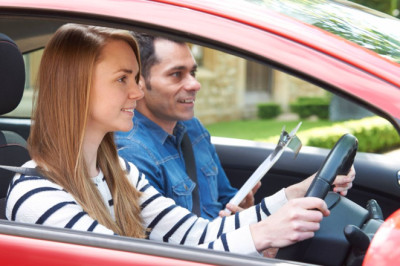
A friend told me countries such as America, Ireland and Australia use a graduated driving licence (GDL), which puts a set of restrictions on new drivers who have recently passed their practical test for an initial period of time. In some countries it also stipulates that a young person must have a minimum amount of supervised learning in a car before being able to take their test, which could be a combination of paid lessons and practice with a parent or a volunteer.
In Canada, where the GDL exists, road deaths among young and newly-qualified drivers have reduced by 83 per cent.
When I started doing further research, I was shocked by the figures. Every week, 95 people are killed or seriously injured on Britain’s roads as the result of a young driver. A newly-qualified driver is three-and-a-half times more likely to kill or seriously injure somebody on the roads than a person aged 70 to 85, and one in five has a crash within the first year of passing their test.
Young male car drivers aged 17 to 24 are four times as likely to be killed or seriously injured compared with all car drivers aged 25 or over – even though they hold only seven per cent of driving licenses in the UK and drive fewer miles than any other age group.
I was shocked to learn that road death is the biggest killer of young people in the UK after suicide, and the biggest killer worldwide.
'He’d done what most teenagers do at some point, telling a fib to gain more freedom. Every teen makes mistakes, but tragically Harvey never got to learn from his,' writes Crystal
A candle left in tribute at the site of the crash to the four boys: Harvey, Jevon Hirst, Wilf Fitchett, all 17, and the driver, 18-year-old Hugo Morris
As parents, we worry about our children being exposed to dangers such as drugs and alcohol. But it turns out the biggest risk is getting into a car with their friends.
From then on I devoted myself to campaigning for the GDL to be made law here – specifically, a GDL aimed at 17- to 19-year-olds, who are more likely than any other age group to be killed or seriously injured on our roads.
It’s nearly two years to the day since Harvey headed off with two of his oldest friends, Jevon Hirst and Wilf Fitchett, both 17, to stay at Jevon’s grandad’s cottage in Wales for two nights. Harvey was due to return by train on the Monday, ready for college the following day.
Just before he left on the Saturday evening, he gave me the loveliest grin as I sat on his bed listening to him playing Ring of Fire by Johnny Cash on his guitar, one of my favourite songs.
My parting words were: ‘I love you, Harvey, I’m so proud of you. Have a lovely time.’
That was the last time I saw my son alive.
I’d agreed to the trip based on my understanding that Jevon’s dad, a solicitor, would drive them from Shropshire to the cottage in Harlech, 80 miles away. He’d even recorded a short video, which Harvey showed to me, in which he could be heard saying: ‘Don’t worry, the boys will be safe at my dad’s cottage.’
I’ve always worried about my children and keeping them safe, but because Harvey and his best friends hadn’t yet had driving lessons, this wasn’t one of my concerns.
Harvey went to Jevon’s house nearby that Saturday night to depart for the cottage. He texted later that evening to say they’d arrived safely in Wales, and reassured me with a picture of the sea view from the cottage the next morning.
Later that day, I messaged to check he was OK. When the messages didn’t send, I assumed there must have been a poor phone signal.
Unbeknown to me, that morning they’d left to go camping in Snowdonia – and hadn’t made it. Jevon’s dad hadn’t been their driver for any part of the trip; it was Hugo Morris who drove the 80-mile trip and then set off on the short seven-mile drive to Snowdonia the following day. This was a boy I hadn’t even known existed, but later discovered was a new friend from college.
Harvey would have known that camping in winter and being driven by a boy with barely any experience, who’d only passed his test months before, was a stupid idea. And he knew I would never have agreed to it, which is why he hadn’t told me.
He’d done what most teenagers do at some point, telling a fib to gain more freedom. Every teen makes mistakes, but tragically Harvey never got to learn from his.
Always the boy most likely to comfort friends who were upset, Harvey was an old soul who loved The Beatles and had a passion for food
'Living without Harvey is agonising,' writes Crystal. 'His pyjamas are at the end of my bed, and his woolly hats and coats still smell of him, which I find comforting'
By Sunday evening I was worried. Still unable to get hold of Harvey, my older daughter Yasmin, who’s now 21 and at university, reassured me it would just be the signal, while my partner Peter said if anything was amiss, someone would have raised the alarm.
Call it mother’s instinct, but I had a creeping sense that something was horribly wrong.
When Jevon’s mum also became worried, she called me and inadvertently exposed Harvey’s lie, not realising I was the only parent unaware of both the camping trip and the young driver. All I could picture was Harvey freezing to death in the thin coat and trousers he’d been wearing.
A huge search involving police, coastguard and mountain rescue teams was launched that night. It was a living nightmare.
Frantic with worry, we called the police every 30 minutes to check for news and constantly tried Harvey’s phone. Although the police asked us to stay at home where they’d have a better chance of contacting us with updates, at 5am on the Tuesday, Pete and I drove to Snowdonia.
There were false leads from well-meaning members of the public saying they’d seen the boys, or spotted the car, but at around 11am on Tuesday, November 21, at the police station in Bangor, we were given the most horrific news that any parent could ever receive.
Harvey and his friends were dead.
The passenger in a passing bin lorry had spotted their car upside down in a ditch that morning and called 999. They had never reached the camp site, the crash had happened en route.
I remember screaming and feeling searing physical pain unlike anything else I’d ever experienced.
The following day, Peter and his father had to hold me up as I walked into Bangor Hospital to go through the events leading up to Harvey’s death with the professionals. When they told me that Harvey’s body was behind the wall of the room where we were sitting, I ran outside, delirious with grief.
Crystal now spends most evenings in the music room of the family home, which has become a shrine to Harvey, listening to his favourite songs and wearing one of his jumpers
'Knowing I’m doing everything to lobby for change helps, in some small way, with the impossible task of having to live without my beautiful, kind, quirky son,' Crystal says
Peter had been Harvey’s stepdad for eight years and bravely identified his body to spare me the ordeal, gently telling me that he looked handsome with no marks from the crash.
I’ll always torture myself that I didn’t visit him in the chapel of rest a few days later after a medic told me he looked different. But these are choices no parent ever imagines having to make.
Details of the crash began to emerge. Torrential rain had seen the water level in the ditch rise by a metre, high enough for them to drown in. And the rear tyres had been underinflated, which caused an ‘understeer’ as the car rounded the bend. Hugo Morris’s driving was also said to be a ‘significant factor’ in the crash.
Hundreds of people attended Harvey’s funeral the following month and there were so many heartfelt things said about my son. One of his old friends from primary school told me, ‘I was considered a nerd at school, Harvey was the only one who looked out for me.’
At the inquest in October 2024, the coroner called for new legislation to be introduced to prevent more deaths.
Around the same time, I co-founded Forget-me-not Families Uniting which, sadly, now has 250 members, all dealing with the devastation of losing a teenager in a road crash. Some had passed their test after only five lessons, then killed themselves or someone else on the roads.
Countless motoring organisations and road safety charities, including the RAC, AA, Road Peace and Brake, are backing our campaign for the GDL to be made law.
This April, I hand-delivered a petition with more than 103,000 signatures to Downing Street, along with four other bereaved parents.
We’d already had a well-attended parliamentary debate organised by my MP, Julia Buckley, where almost all of the 30 MPs in the room agreed that change was long overdue.
Yet despite decades’ worth of research and evidence, the support of the major driving and road safety organisations and countless behavioural psychologists urging the Government to implement stronger rules for new and young motorists, they continue to refuse. It would have saved Harvey’s life.
The Government claims it will seek to educate young drivers and will publish a road safety strategy – the first in more than ten years – ‘in due course’.
Harvey would have been 19 tomorrow, and the second anniversary of his death falls less than two weeks later.

Ahead of these painful dates, I’ve written to the Secretary of State for Transport, Heidi Alexander, to request a meeting. I hope she will grant me an audience.
A few weeks after Harvey died, we moved into what should have been our dream family home. Harvey had been so excited as the new house had more space and a dedicated music room where he and his friends could practise.
We imagined him being at home for at least the next five years, or as he used to tell me when he was a little boy: ‘I’m never going to move out, I want to live with you for ever.’
Now, most nights I sit in the music room, which has become a bit of a shrine to him, wearing one of his jumpers and listening to his favourite songs, often crying until the early hours.
My two little girls Sophia, six, and Olivia, four, tell me that life was better when they had a big brother – and my eldest, Yasmin, says Harvey was her hero.
I still can’t compute that I will never see or hear Harvey again, except in my dreams. The ache and longing to hold him grows more intense every day.
But knowing I’m doing everything to lobby for change helps, in some small way, with the impossible task of having to live without my beautiful, kind, quirky son.
* As told to Sadie Nicholas