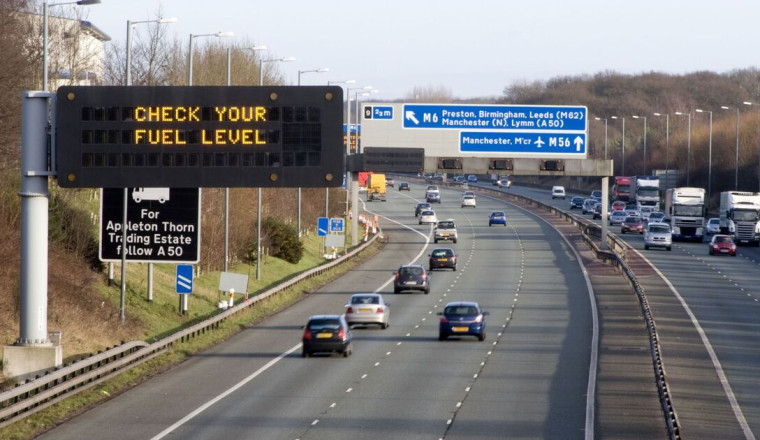

Drivers who use motorway petrol stations are being hit with 20p per mile fuel charges in January thanks to an eyewatering ‘tax’ on refilling on roads like the M1, M5, M25 and M42. According to the RAC’s latest fuel price data, drivers currently pay an average of 134.06p per litre for unleaded petrol in the UK, rising to 142.9p for diesel.
But as any driver who has been caught short in need of fuel on the motorway will attest to, the average cost of filling up at motorway services is far higher. Service stations charge an average of 157.31p per litre for unleaded petrol, an astonishing premium which prices it higher than the cost of diesel at regular petrol stations. According to car insurance firm Nimblefins and its average fuel cost calculator, the average petrol car has 36mpg fuel economy in the UK.
At 36mpg, filling up at 157.31p per litre, the cost per mile is a hefty 20p. That’s 3p more per mile than it would cost to fill up at a regular petrol station at 134.06p.
It also shows that, even with the new EV pay-per-mile charges being introduced by the Government, driving a petrol car remains significantly more expensive per mile than an EV in pure fuel costs, even when factoring in the tax and charging costs.
Chancellor Rachel Reeves unveiled the policy to introduce a 3p-per-mile tax for EVs which is set to take effect from 2028.
When coupled with the average cost of charging an EV at home, this would bring the cost of running an electric car to between 5p and 11p per mile.
The scheme is set to be implemented in 2028 following a consultation, and would cost EV drivers an average of £250 per year.
Motoring groups expressed concern that such a tax could put some people off from switching to electric cars.
The Treasury faces a reduction in revenue from fuel duty as more drivers move from petrol or diesel cars to EVs.
Successive governments have found the prospect of introducing per-mile charges for driving – sometimes referred to as road pricing – too politically toxic.
Ms Reeves’s EV scheme will involve users estimating how far they will drive over the following 12 months, and making an extra payment on top of vehicle excise duty (VED).
If they drive more, they will need to top up this amount, while some of the money would carry over to the next year if someone clocks up fewer miles.