

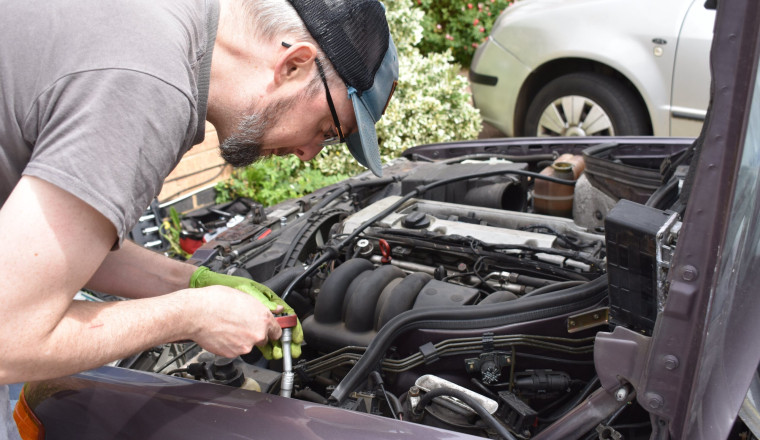

When most of our classics were contemporary, owners were expected to be able to carry out basic car maintenance and servicing. Don’t believe me? Well, you need only browse an owner’s manual from the mid-1980s (or earlier) to see the genuinely useful amount of mechanical guidance and technical information contained. If you’re even remotely handy with the spanners (aka wrenches), or merely just mechanically curious, you’ll likely already know the level of care and attention makers used to put into their manuals. Today, they seem only to tell you where to plug in your phone and, if anything goes wrong, how to contact your nearest dealership so a kid with a laptop can charge you by the hour for the car to tell him what’s wrong. How times have changed …
Before we get into this, we know not everyone has the aptitude, confidence, patience, or even enthusiasm to pick up some tools and start whipping off cylinder heads or renewing suspension. But, if you’re so inclined, you should start small and see how things go. If you’ve never worked on your own old car, you’ll be amazed how it can help you bond. Yes, I am hopelessly emotionally invested in my four-wheeled machines as a result, but that comes as much from driving them as it does from spending time under their hoods.
We all love the driving and visceral delights of old-car ownership—some people even like to clean them—but when you’ve fixed something that was keeping your classic off the road, or was making it run sub-par, it’s hard to express the sense of achievement that comes from sorting that yourself. Trust us, it works wonders for your mental health, not to mention your bank balance. If you’re not experienced or confident mechanically, but have always wanted to give it go, then start by tackling something small; be realistic. Perhaps it’s just the piece of trim that’s been looking a little ropey, or the audio upgrade you’ve always wanted. Whatever it is—and this is essential—make sure you do your own research before you start.
There are a lot of great outlets offering practical information about fixing cars, from newsstand classic car magazines to good old Haynes manuals to YouTube. The important thing is to make sure you know what you’re getting into, before you start. Comfortable you know what’s what, and you’re up for the challenge, be aware of any common pitfalls or safety concerns, and make sure you have all the tools you need.
My experience, mainly of getting things wrong, has taught me a few valuable lessons. First, always buy the best tools you can afford; cheap ones are tempting but often make the job far harder than it needs to be. My minimum list of tools for most home tinkering tasks, or a portable toolkit for roadside repairs, consists of a decent set of screwdrivers (flat head and Philips, or better still a bit set with driver), spanners open and ring (the latter preferably racheted) and a good socket set and wrench, with a few different length extensions. A rubber mallet, pliers (with wire strippers), a multimeter, and a breaker bar also can’t hurt, but we’re getting ahead of ourselves…
If you’re getting underneath the car, which is often essential for servicing—removing the plug to drain oil, for example—then make sure you add a decent hydraulic jack and suitable jack stands to the above list (both rated for the car’s weight). Never get under any car supported just by a jack. I always deploy a pair of stands, plus the jack. An old carpet or, better still, foam gym/garage flooring mats will also make crawling under a lot more comfortable. Which reminds me, don’t try to work under a car if it’s on grass or gravel: It’s dangerous. A level concrete or asphalt surface is always best.
A lot of online sellers now offer servicing kits for popular classic models, at a reasonable cost, making this one of the best ways to start tinkering. Swapping air and oil filters is usually a snap—fuel filters less so—but with any fluid, make sure you can remove the filler before opening the drain. Ask me how I know… If you’re feeling a little more ambitious, and feel confident in your abilities, you can begin to move onto things like brakes, steering, and suspension, but these require more specialist tools, knowledge, and safety procedures.
While on that latter topic, if you do plan to work on your classic, please bear in mind that this isn’t a “how to” guide. It’s just a few shared experiences. Always ensure you do your own research and risk assessments before any job, no matter how small. Working on cars can be dangerous, there are chemical hazards, fumes, flammable liquids, and even electric shock risks, all of which (and more) need to be considered and mitigated. If you do take the right precautions and approach things in a safe and methodical fashion, fixing your own car can be hugely satisfying and enjoyable. You might even get to the stage, like me, where you get the workshop withdrawals, itching for those days when you can close the garage door, put on your favorite mix tape, and lose yourself in a world of nuts and bolts, grease and oil. Tinkering with old cars can be addictive. Don’t say we didn’t warn you!
Start with something small and simple if you are not comfortable and work your way up from there. Just poking around will help you to learn more about your car.
#1 know your limitations.
#2 youtube is your friend not Haynes.
#3 learning to work on your car is becoming even more important as the small shops catering to older cars are becoming scarce.
#4 the more you know and understand about your car the better.
Most jobs are easy if you just have the info and the correct tool. Take photos before you start and as you go to help assembly.
Finally the true side effect is it often will save you money too.
Now if you have a job more than you are ready for or if it is rusted or really in bad shape then give it to a shop. You do not want to go to a shop with a bunch of broken and removed parts as many will reject the job.
One of those telescoping magnet-on-a-stick dohickies is handy too. Also, a good pair of gloves can help prevent at least some of the scrapes and bruises common to mechanical work.
I’ve been doing more of my own wrenching lately, even though I don’t enjoy the process all that much. A combination of low patience and high standards leads me to have most work done by the pros. But sometimes the DIY approach makes more sense.
I’d estimate that at least 80 percent of the frustration in wrenching is directly related to fasteners. Frozen, stripped, broken, or unreachable. About another 15 percent these days is defective or wrong replacement parts. Having to do the job once is bad enough, but having to do it several times due to issues with the new parts sucks way worse.
Also if you are into cars keep your car friends close to draw upon for info. You don’t need them to turn the wrench but they can help with their experience and knowledge.