
We may receive a commission on purchases made from links.
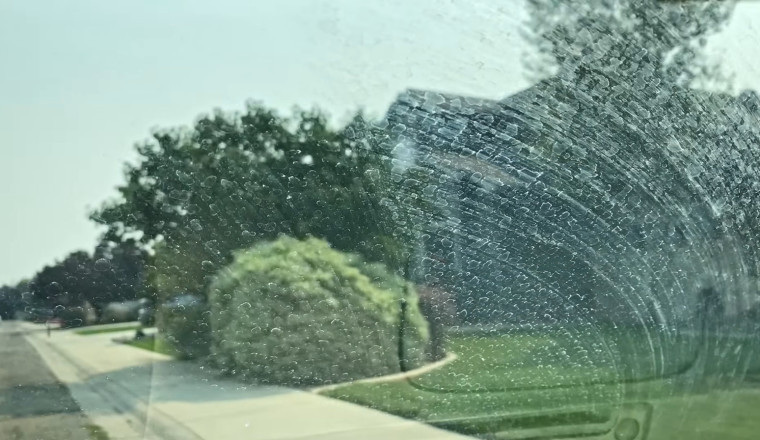
If you've ever walked out to your car, looked through the windshield, and thought, "Guess I'm driving to the Milky Way again," congratulations! You've met hard water.
Hard water is the main culprit of these stains. It's loaded with minerals like calcium and magnesium. Water stains form when water evaporates but its dissolved minerals stay behind, something glass cleaners like Windex could fix.
The DIY or "thrifty" crowd isn't helpless, though. A classic 50/50 solution of water and white distilled vinegar works because its mild acidity dissolves alkaline mineral deposits. First, wash your windshield. Then spray the solution, let it sit for five minutes, and wipe like you're erasing evidence. Lemon juice works on the same principle, though it's stickier and tends to leave pulp. Bonus: Your car smells good, too.
Baking soda paste adds gentle abrasion, but overdo it and you're basically sanding your windshield. A clay bar can also help pull out bonded contaminants. Others swear by 0000-grade steel wool — a bit risky, but some testify it's safe on glass when lubricated properly. A razor blade or scraping knife at a shallow angle will scrape off stubborn deposits, but be careful not to cut yourself. And there are million other ways to do this, like magic erasers or toothpaste (minty, but really?). Do what suits you and fits your budget.
DIY fixes are cheap and oddly satisfying, but they're not magic. Deep, etched-in spots may still be there until you escalate to the big guns.
 Trigub/Shutterstock
When the vinegar, clay bar, and lemons stop doing anything except making you question your life choices, it's time to upgrade to the professional stuff.
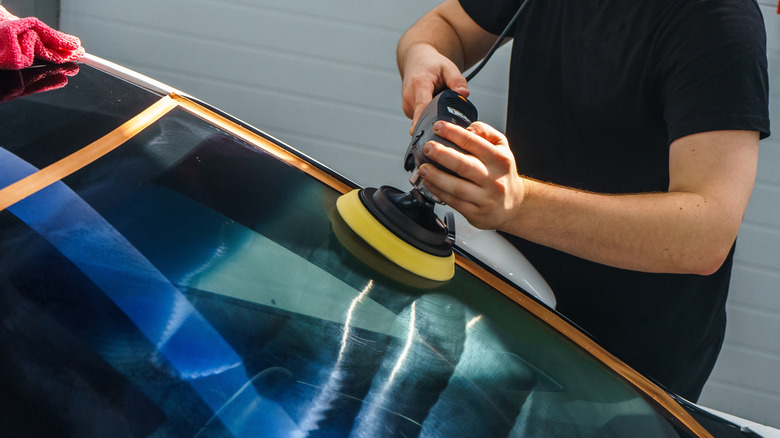
There are professional glass polishes and compounds, the kind detailers use to remove everything short of meteor impacts. Automotive glass polishes like Meguiar's and 3M combine micro-abrasives with lubricants to safely grind out mineral buildup. Some detailers reach for cerium oxide, a rare-earth polishing compound that intensively removes stubborn water spots and reconditions the glass. Used with a felt pad on a machine polisher or by hand, cerium oxide can erase years of neglect and whatever your city's water department added.
Commercial water spot removers, both acid-based and non-acid, use stronger chemical reactions to break down mineral deposits. Acid-based options are extremely effective but risky for beginners, as many can damage trim, paint, or tint. Use them carefully and with gloves unless you enjoy tingling fingers. Among these are Mothers and Chemical Guys.
In the worst cases, where minerals have etched deeply enough to distort light, the pros may recommend a costly windshield restoration or even replacement. Yes, water can damage glass that badly. After restoring that windshield, don't forget to apply some rain repellent coating for more protection.
Professional methods cost more, but they deliver real results. They can save you from spending three hours rubbing lemon juice on your windshield.