
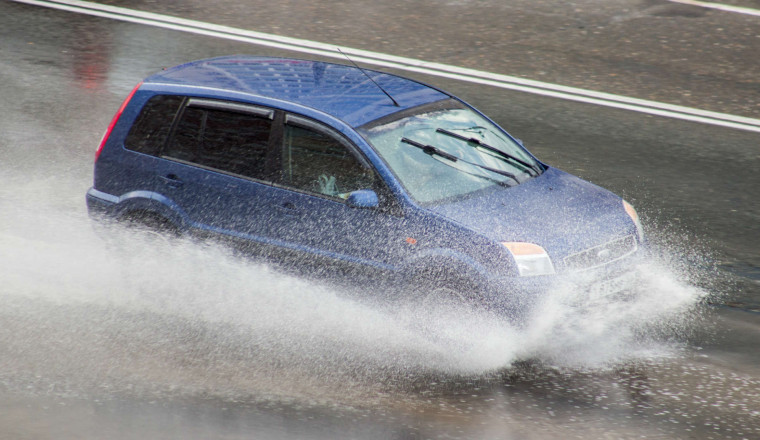

Heavy rain is a staple of British weather, but it poses real challenges for drivers – potentially increasing the risk of accidents.
In wet conditions, braking distances will be much longer than on dry roads. This is primarily because your car’s tyres have less grip.
The ‘two-second rule’ for leaving a gap to the car in front no longer applies. Instead, the Highway Code recommends drivers allow at least twice the stopping distance on wet roads.
Further advice for driving in heavy rain includes:
Richard Gladman of IAM RoadSmart said: “With the British weather the way it is, we should all be well practised at driving in the rain. Keeping your car maintained and the rubber (tyres and wiper blades) in good condition will help you stay safe.
“We have seen that standing water and floods are becoming more commonplace, so take extra care and, if possible, avoid driving through standing water. If you’re in any doubt about the depth or surface underneath a flood, then it’s best not to take any chances.”
As winter looms, IAM RoadSmart has the following additional advice for driving in the rain – including what to do if the road is flooded.
ALSO READ:
Should you use a dehumidifier for your classic car this winter?
Which lane should you use on an unmarked roundabout?
The best new cars to buy in 2025
The Bugatti FKP Hommage is a 1,600hp modern tribute to the Veyron
We set sail for Alpine F1’s 2026 launch
New Omoda 5 hybrid SUV undercuts Kia Sportage by nearly £10k