
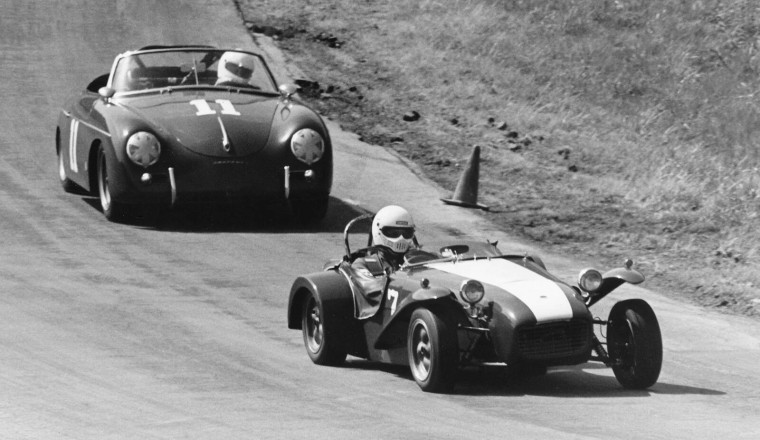

Colin Chapman learned to fly Chipmunks and Harvards during his RAF National Service between 1948 and 1950. Four years later, he was building the Lotus Seven in a lock-up garage in North London, applying everything the Royal Air Force had taught him about lightweight construction and aerodynamics. Chapman wasn't alone. Across post-war Britain, former RAF pilots and aircraft engineers were transforming military aviation technology into the sports cars that would define a generation.
The connection runs deeper than coincidence. Sydney Allard flew Spitfires during World War II, then founded Allard Motor Company in 1945 using aluminum construction techniques learned from aircraft manufacturing. Donald Healey, an RFC pilot from the First World War, designed the Austin-Healey 100 in 1952 by adapting streamlined principles from his aviation background. These weren't just car enthusiasts who happened to have military experience. They were engineers who saw the automotive potential in wartime innovations.
Lotus represents the clearest example of this technology transfer. Chapman's 1957 Elite became the first production car with a fiberglass monocoque construction, directly adapted from aircraft techniques used for radar domes and lightweight fuselages. The Elite weighed just 1,100 pounds thanks to methods Chapman learned working with de Havilland after his RAF service. Only 988 Elites were ever built between 1958 and 1963, but the construction principles Chapman pioneered influenced every subsequent Lotus model.
The Jaguar D-Type tells a similar story through different channels. Malcolm Sayer, who designed the car's distinctive aerodynamic body, spent the war years as an aircraft engineer at Bristol Aeroplane Company. When Jaguar hired him in 1951, Sayer brought wind tunnel testing methods and streamlined design principles that had never been systematically applied to road cars. The D-Type's monocoque center section and integrated roll hoop came straight from aircraft engineering. Jaguar built just 87 D-Types between 1954 and 1957, but three of them won Le Mans.
Like this? Get the app: iOS | Android
The materials mattered as much as the men. Britain's aircraft industry had developed advanced aluminum alloys and fabrication techniques during the war, creating a supply chain and skilled workforce that sports car manufacturers could tap. Allard's J2X used aircraft-grade aluminum for its body panels, while TVR adopted fiberglass construction methods originally developed for aircraft components. Even established companies like Bristol moved directly from building aircraft to building cars, launching Bristol Cars in 1946 with engines derived from BMW aircraft powerplants captured during the war.
The timing created perfect conditions for this crossover. The RAF was demobilizing thousands of technically trained personnel just as Britain's economy was shifting from military to civilian production. Aircraft companies like de Havilland, Bristol, and Vickers had excess engineering capacity and advanced materials they needed to commercialize. Small sports car manufacturers offered an outlet for both the people and the technology.
Financial necessity drove innovation further. These companies couldn't afford traditional steel pressing tools or mass production facilities, so they embraced lightweight construction and low-volume manufacturing techniques adapted from aircraft production. Chapman built the first Lotus Seven for £1,500 using aircraft-inspired space frame construction that made expensive tooling unnecessary. The approach worked so well that Caterham still builds essentially the same car today.
The RAF connection explains why British sports cars developed such distinctive characteristics compared to their European counterparts. Italian manufacturers like Ferrari emphasized powerful engines and traditional coachbuilding. German companies focused on precision engineering and robust construction. British sports cars prioritized lightness, handling, and aerodynamic efficiency because their creators learned engineering in an environment where weight meant the difference between life and death at 400 mph.
This military heritage shaped British automotive culture in ways that persist today. The emphasis on doing more with less, the willingness to experiment with unconventional materials, and the focus on driver engagement over pure comfort all trace back to those post-war pioneers who applied fighter plane thinking to sports cars. When enthusiasts talk about British cars having character, they're really talking about the RAF's influence on four wheels.
Sources: Classic Driver - Colin Chapman History | Jaguar Heritage - D-Type History | Allard Register - Company History