
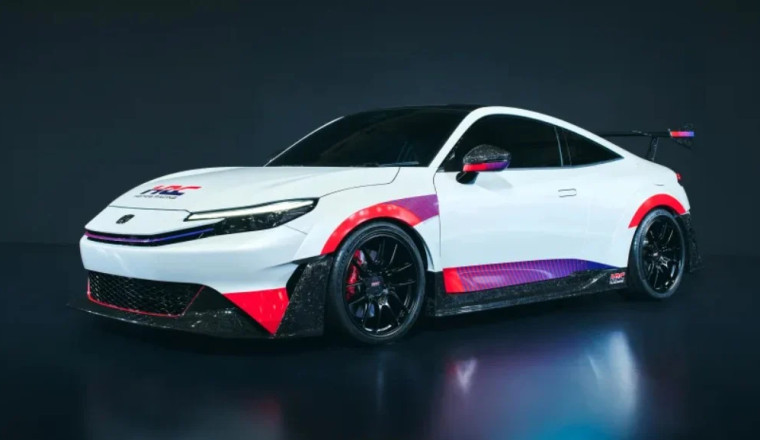

Honda has officially crushed any hope of a Prelude Type R, with executives stating the development would demand "hundreds of millions of dollars" in investment. The decision comes just as anticipation builds around the Prelude nameplate's return, leaving Type R faithful wondering if Honda still remembers what made them fall in love with the brand.
The automaker's blunt financial reasoning exposes the harsh reality facing performance car development in 2024. Where enthusiasts see an opportunity to revive one of Honda's most celebrated performance combinations, executives see a balance sheet that simply won't justify the expense. The original Prelude Type R, a Japan exclusive from the 1990s, has achieved near mythical status among Honda devotees who hoped the returning nameplate would get the full Type R treatment.
Honda's current Type R strategy centers entirely on the Civic Type R, which launched in its FL5 generation form in 2022 with 315 horsepower. That singular focus apparently leaves no room for expanding the Type R family, despite the obvious appetite from enthusiasts who have watched competitors like Toyota successfully diversify their performance offerings across multiple models.
The "hundreds of millions" price tag reflects the extensive engineering required to transform any modern Honda into a proper Type R variant. Structural reinforcement, powertrain modifications, suspension tuning, aerodynamic development, and extensive testing all demand massive investment before the first car rolls off a production line. Honda executives clearly decided that investment wouldn't generate sufficient return.
Like this? Get the app: iOS | Android
The decision stings particularly because Honda teased the Prelude's return at the Japan Mobility Show 2023, generating significant enthusiasm among performance car buyers who assumed Type R variants would naturally follow. Instead, they're learning that modern automotive economics don't care about their nostalgia or enthusiasm for legendary nameplates.
Honda's position mirrors similar decisions across the industry, where automakers increasingly concentrate performance development resources on proven sellers rather than expanding into niche markets. Ford's recent explanation of why the Fiesta had to die in Europe, with executives stating "we have to pay the bills," reflects the same brutal arithmetic that killed Prelude Type R dreams.
The financial reality behind Honda's decision reveals how dramatically performance car economics have shifted. Development costs that might have seemed manageable in previous decades now represent investments that could fund entire electric vehicle programs or multiple mainstream model refreshes. Honda executives apparently decided those alternatives offered better returns than satisfying Type R enthusiasts.
For Honda faithful who remember when the company seemed willing to build almost anything with a red H badge, this decision represents another step away from the brand's performance heritage. The Prelude Type R that will never exist joins a growing list of enthusiast dreams that died in corporate boardrooms, leaving car lovers to wonder if passion projects can survive in an industry increasingly driven by pure financial calculation.
Sources: Industry reporting on Honda executive statements regarding Prelude Type R development costs and strategic decisions