
An MP has questioned plans for a major change which will affect every older driver. Sweeping changes are being proposed affecting all drivers under the government's planned Road Safety Strategy.
The plan, launched in January this year, aims to reduce road deaths and serious injuries by 65% by 2035. Key proposals include introducing 18 new vehicle safety technologies, lowering the drink-drive limit and implementing a minimum 3-6 month learning period for new drivers.
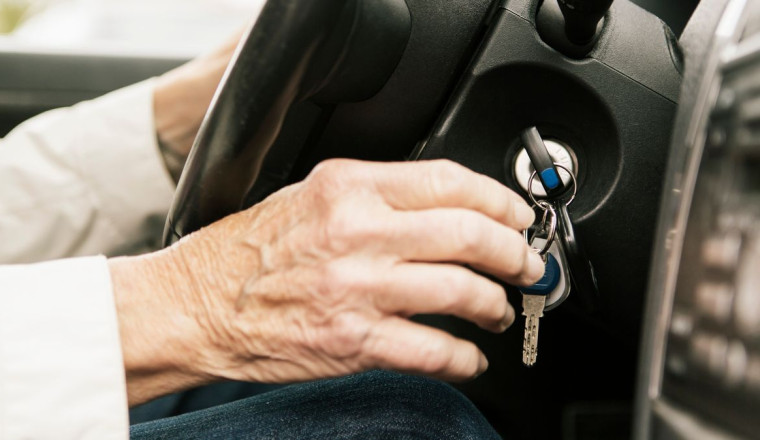
It also includes introducing mandatory eyesight tests for drivers over 70. However, a question has now been raised over this amid concerns over who would carry out the eye tests.
In a written question to the Department of Transport, Liberal Democrat MP Zoe Franklin asked Secretary of State for Transport, Heidi Alexander, for further details on what their plans were. She said she wanted to "ask the Secretary of State for Transport, whether her Department has held discussions with optical providers on participation in a scheme for eyesight testing for drivers aged 70 and over renewing their licence; and whether she is taking steps to ensure that any such scheme allows certification by any suitably qualified optician rather than a single provider."
Replying on behalf of the department on Tuesday, Lilian Greenwood, Parliamentary Under-Secretary for the Department of Transport said the plans were currently out for consultation. She said in a written answer: "On 7 January 2026 we published our new Road Safety Strategy, setting out our vision for a safer future on our roads for all.
"Alongside the strategy, we launched five consultations including a consultation on introducing mandatory eyesight testing for older drivers. We welcome responses from optometrists and optometrist organisations to the consultations.
"On 24 February, I chaired a roundtable meeting on eyesight and older drivers which involved representatives from the optical sector and optometrist organisations to discuss mandatory eyesight testing for older drivers. Department officials have also met with various optometrist organisations (including the College of Optometrists and the Association of Optometrists) while developing the proposed changes to eyesight testing for older drivers. We will continue to engage with optometrist organisations as our policies develop further."
At present drivers over 70 in Great Britain must renew their licence every three years and self-declare they meet eyesight standards. Proposed changes, under consultation until May 2026, aim to replace this with mandatory, formal eye tests every three years
The Local Transport minister has previously explained why the government was looking to bring in the change. She said then that in 2024, there were 1,224 killed or seriously injured (KSI) older car driver casualties, a decrease of 3% compared to 2023, but an increase of 7% compared to 2014.
The plans have generally been welcomed however some said changes should be made to the plans. Caroline Abrahams, Charity Director at Age UK said: "Improving road safety is in the interests of us all so we look forward to seeing how the Government's new strategy for drivers seeks to achieve this in an effective and proportionate way once it is published in full soon.
"For now, media reports suggest that the strategy will say that drivers will have to show proof of good eyesight when they renew their licence at age 70 and every three years thereafter, whereas for now they are required only to self-certify. When a previous Department of Transport supported Older Drivers Taskforce looked at these issues in detail, they also recommended a move away from self-certification, but they coupled it with a proposal to raise the age at which you have to renew your licence to age 75.
"They took this view on the basis of the evidence, pointing out that the age of 70 was chosen quite arbitrarily in 1971 when life expectancy was 68 for men and 72 for women. Both have of course since increased quite substantially and vehicles are also safer than they were all those years ago.
"Age UK believes that requiring evidence from an eye test, together with raising the age at which this is required to age 75, would be a balanced, evidence based approach, but to do the first without the second feels disproportionately negative so far as older drivers are concerned, the overwhelming majority of whom take very seriously their responsibility to be safe on the road.
"In addition, while requiring an eye test may be a sensible safeguard to bring in now, one that reflects practice in a number of other similar countries, no one should think that in and of itself it will lead to a significant reduction in road traffic accidents, because the data suggests that poor eyesight among older drivers is not a leading cause."
Context:
Drivers over 70 will need mandatory eye tests every 3 years instead of self-declaring vision standards.
Context:
This affects road safety as poor eyesight contributed to over 1,200 serious injuries among older drivers in 2024.
Context:
The current age 70 renewal requirement was set in 1971 when life expectancy was much lower than today.