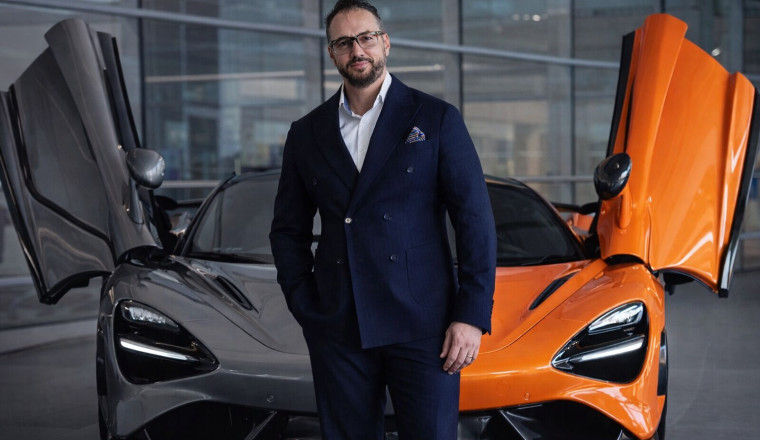

The man who gave the Ford Mustang its current predatory stance has traded Detroit muscle for British precision. Kemal Curic, the design executive behind the sixth-generation Mustang's exterior transformation, has been appointed Design Director at McLaren Automotive, stepping into one of the most influential creative roles in the supercar world.
Curic's appointment signals McLaren's serious intent as the Woking-based manufacturer prepares to reinvent its entire lineup around hybrid and electric powertrains. His arrival comes at a moment when McLaren faces the challenge of translating its aerodynamic expertise and racing heritage into an electrified future while maintaining the visual drama that defines modern supercars.
At Ford, Curic served as Chief Designer for the Global Design Studio, where his most visible achievement was overseeing the exterior design of the 2015 Mustang refresh that transformed Ford's pony car from retro pastiche into genuine modern muscle. The angular headlights, pronounced front splitter, and muscular rear haunches that define today's Mustang GT and Shelby variants all bear his creative fingerprints.
The timing of his move reflects the automotive industry's broader design talent migration as traditional boundaries blur between American muscle, European luxury, and electric innovation. McLaren's current Super Series lineup, anchored by the 720S and 750S, represents the culmination of nearly two decades of development. The company now faces the task of creating successors that maintain McLaren's performance credentials while incorporating increasingly complex hybrid systems and eventual full electrification.
Before his Ford tenure, Curic honed his design philosophy at BMW Group, contributing to various BMW and MINI projects that emphasized the marriage of functionality and emotional appeal. That background positions him well for McLaren's technical demands, where aerodynamic efficiency and visual impact must work in perfect harmony.
Like this? Get the app: iOS | Android
McLaren's design challenge extends beyond mere aesthetics. The company's next-generation architecture must accommodate battery packs, electric motors, and cooling systems while preserving the low-slung proportions and dramatic door configurations that McLaren customers expect. The 720S's distinctive dihedral doors and flowing side intakes represent more than styling flourishes; they're integral to the car's aerodynamic performance and cooling requirements.
The appointment also reflects McLaren's recognition that design leadership increasingly determines success in the ultra-premium segment. Competitors like Ferrari have demonstrated how distinctive visual identity can command premium pricing even as underlying technologies converge. Curic's challenge will be establishing McLaren's design language for an era when electric powertrains fundamentally alter packaging and proportions.
Industry observers note that successful automotive designers increasingly move between brands and continents, carrying cross-pollinated influences that reshape entire segments. Curic's journey from BMW's precise Germanic aesthetic through Ford's American muscle heritage to McLaren's British engineering culture represents exactly this kind of creative migration.
For Ford, losing Curic represents the departure of institutional knowledge just as the company navigates its own electrification challenges. The Mustang Mach-E's controversial SUV configuration and the upcoming electric Mustang sedan will test whether Ford can maintain the brand's visual DNA without his direct input. Ford's design teams must now prove the Mustang's aggressive character can survive the transition to electric power without the designer who defined its current appearance.
McLaren's bet on Curic suggests the company believes American muscle car sensibilities can enhance British supercar sophistication. Whether that cultural fusion produces the next generation of McLaren icons will depend on how successfully he translates Detroit's bold confidence into Woking's technical precision.
Sources: Industry reports on automotive design leadership transitions. Specific quotes and official confirmation would require verification from McLaren Automotive press releases and automotive trade publications.