
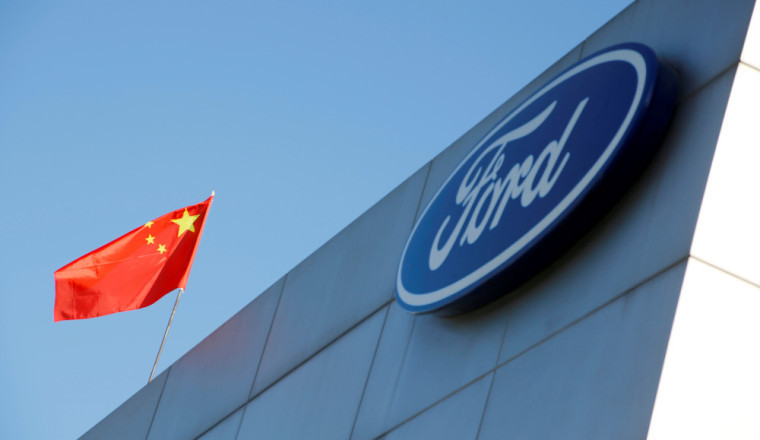

Ford Motor Company and China's Geely Group are deep in talks over a manufacturing partnership that would let the Chinese automaker produce electric vehicles inside Ford's underutilized Spanish plant, neatly sidestepping the European Union's tariffs on Chinese-built EVs.
The Valencia, Spain facility sits at the center of the discussions, according to Reuters reporting citing eight sources familiar with the negotiations. Ford sent a delegation to China this week to intensify talks following meetings in Michigan last week between senior executives from both companies. The discussions have been ongoing for months.
Valencia currently produces only the Ford Kuga compact SUV. Output likely dropped below 100,000 units last year, per French consultancy Inovev, while the factory maintains an annual capacity of roughly 400,000 units. That's a lot of empty floor space sitting idle.
For Geely, manufacturing inside the EU solves a serious problem. The European Union imposed tariffs of up to 37.6 percent on Chinese-made electric vehicles in 2024, warning about what it called unfairly subsidized imports flooding the market. Building cars in Spain instead of shipping them from China removes that cost penalty entirely.
Ford gets utilization. Geely gets market access. Both avoid investing in new facilities.
The partnership would add to Ford's roster of European collaborations. The company recently struck a deal with Renault to jointly develop affordable EVs and maintains a technical partnership with Volkswagen. Ford has also been cutting costs aggressively, shedding jobs at its Cologne EV plant in Germany as European operations struggle with declining market share.
Geely owns Volvo, which Ford famously sold to the Chinese company back in 2010 for roughly $1.8 billion. The Swedish automaker is now valued at approximately $9.7 billion. Geely has since expanded into Lotus, Polestar, London black cabs, and holds minority stakes in Mercedes-Benz and Aston Martin. Billionaire Li Shufu, who controls Geely, said last year the company would stop building new plants due to global overcapacity and instead use existing facilities within the group or work with partners.
That strategy is already playing out elsewhere. Geely partnered with Renault in South Korea and Brazil to produce and sell cars built on Geely technology using Renault's factories and sales networks. Leapmotor, backed by Geely rival firms, will build vehicles at a Stellantis plant in Spain. XPeng manufactures electric models at Magna Steyr's facility in Austria.
According to electrive.com, some sources indicated the talks have also covered potential shared vehicle technologies, including automated driving systems. Two other sources told Reuters the discussions focused on production are more advanced than any technology-sharing conversations.
The Geely EX5 electric SUV appears to be a strong candidate for Valencia production, according to Car News China reporting cited by Carscoops. Volvo vehicles seem unlikely since the EX30 is already manufactured in Belgium.
Ford's official response to the reports was appropriately vague. "We have discussions with lots of companies all the time on a variety of topics," a Ford representative told Reuters. "Sometimes they materialize, sometimes they don't."
Geely declined to comment.
The potential partnership comes as Ford CEO Jim Farley has publicly called Chinese automakers a "colossal strategic threat" while simultaneously exploring tie-ups with several Chinese brands. The Financial Times recently reported Ford held discussions with BYD and Xiaomi about collaboration, though Ford and Xiaomi denied those specific talks and BYD declined to comment.
Chinese automakers remain effectively locked out of the U.S. market due to tariffs and national security restrictions on connected vehicle technology imposed during the Biden administration and continued under Trump. Any Ford-Geely partnership involving vehicles or technology for the U.S. market would face intense political scrutiny, especially after Ford's decision to license battery technology from Chinese manufacturer CATL for a Michigan plant drew sharp criticism from lawmakers.
For Europe, though, the math works. Ford has space. Geely has tariff problems. Valencia sits empty while Chinese EVs pile up at European ports facing import duties. Putting Geely production inside that factory solves multiple problems simultaneously.
Whether the deal actually closes remains uncertain. But the negotiations signal how dramatically the global auto industry is reshaping around Chinese manufacturing capacity, European trade barriers, and legacy automakers trying to fill factories built for a different era.
Ford built Valencia for mass-market combustion vehicles. It might soon be churning out Chinese electric SUVs instead. That wasn't the plan when the factory opened, but it might be the only plan that keeps the lights on.