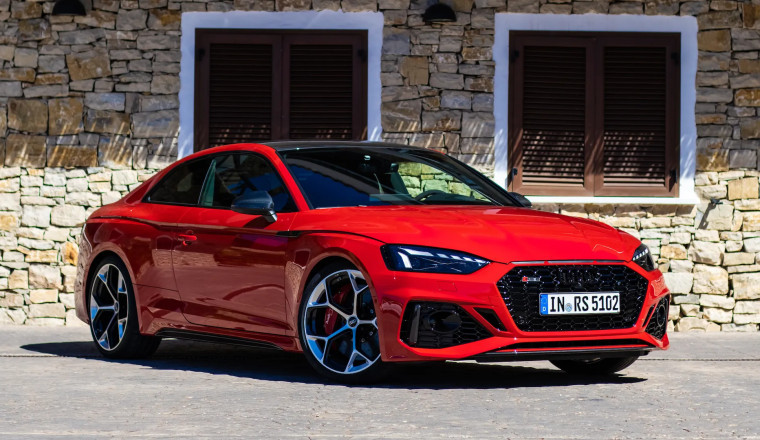

The Audi RS4 is dead. After 27 years carrying that nameplate, killed by Audi's own baffling decision to reserve even numbers for electric vehicles and odd numbers for combustion models. The company abandoned that strategy last year after universal confusion, but the damage was done. The saloon formerly known as the A4 became the A5, and now the high-performance version is the RS5, replacing both the old RS4 Avant and RS5 Sportback despite being mechanically identical to what would have been the next RS4.
Clear as mud? Welcome to modern Audi naming strategy. What matters is the car underneath the badge, and what Audi Sport has created is the most powerful mid-size RS model ever built. According to Motoring Research, the RS5 produces 639hp and 609lb ft of torque, exceeding even the RS6 GT's 627hp output from its twin-turbo V8. This represents a 189hp increase over the outgoing RS4 and positions the RS5 as Audi Sport's first plug-in hybrid performance car.
The powertrain starts with the familiar 2.9-litre twin-turbocharged V6 carried over from the previous RS4 Avant. Audi claims extensive modifications warrant calling it "all-new," though the fundamental architecture remains. Output increases by 60hp to 510hp with torque holding steady at 443lb ft. That alone would make it competitive with the BMW M3's 503hp, but Audi added more.
A 177hp electric motor integrates into the eight-speed automatic transmission, drawing power from a 22kWh battery pack mounted beneath the boot floor. Combined system output reaches 639hp and 609lb ft, though some sources quote 630hp depending on measurement standards. Either figure represents substantial improvement over both the outgoing RS4 and the current M3, though it falls short of the Mercedes-AMG C63 S E Performance's 671hp.
Performance figures reflect the power increase. PistonHeads reports 0-62mph arrives in 3.6 seconds, half a second quicker than the old RS4 and three tenths faster than the RS4 Competition. Top speed reaches 177mph with the optional Audi Sport package, which also includes a sports exhaust and additional carbon fiber trim. Without the package, the limiter cuts in at the standard 155mph.
The electric-only range reaches 54 miles under WLTP testing, substantially better than the 9 miles offered by the Mercedes-AMG C63 hybrid and sufficient for daily commuting without burning petrol. The battery charges at up to 11kW AC, meaning a full charge takes approximately two hours on a home wallbox. Audi claims 20 percent fuel savings under high loads when the electric motor works in conjunction with the combustion engine, though real-world results will depend heavily on driving style and charging habits.
The weight penalty is severe. According to Carscoops, the RS5 saloon tips the scales at 2,355kg, with the Avant adding another 15kg to reach 2,370kg. That's over 600kg more than the old RS5 Sportback and half a tonne heavier than a BMW M3. More embarrassingly, it exceeds the kerb weight of a Ford F-150 SuperCab 4x4 with the V8 engine and 6.5-foot bed, which weighs 2,245kg. A performance saloon weighing more than an American pickup truck with an eight-foot bed represents a philosophical shift in what high-performance means.
Audi addresses the weight through engineering rather than denial. The quattro all-wheel-drive system receives a comprehensive update featuring Dynamic Torque Control at the rear axle. This electromechanical torque vectoring system can shuffle up to 2,000Nm of torque between the rear wheels in milliseconds, using a small electric motor as an actuator combined with planetary gears. A new center differential manages front-to-rear power distribution, typically operating at 50:50 but capable of varying between 15:85 and 70:30 depending on conditions.
The system includes an RS Torque Rear mode, Audi's polite German phrase for drift mode, intended for "non-public roads" where the Tiptronic gearbox can direct up to 85 percent of torque rearward. Audi Sport managing director Rolf Michl told media that the new drive system "marks the beginning of a new era for our RS models. They bring a new level of dynamics to the driving characteristics our customers love and further improve day-to-day use value thanks to all-electric driving and innovative technologies."
Whether the technology delivers on those promises won't be clear until journalists drive the car. Adaptive dampers adjust continuously to minimize body roll while maintaining comfort over bumps. Bespoke Pirelli tires cope with the power and weight. Standard steel brake discs measure 420mm front and 400mm rear, with optional carbon-ceramic items increasing to 440mm and 410mm while saving 30kg. That weight saving matters when the car starts at 2,355kg.
The styling follows RS tradition with modern aggression. The RS5 measures 90mm wider than a standard A5, necessitated by massive wheel arches housing 20-inch alloy wheels as standard with 21-inch rims optional. According to Carwow, almost the entire front end dedicates itself to cooling apertures managing temperatures for the elaborate powertrain. Air curtains shape airflow around the front wheels, boosting aerodynamic efficiency while functional vents integrated into the wings evacuate hot air from the engine bay.
The rear diffuser houses two enormous oval exhaust tips positioned toward the center of the bumper. Carwow's assessment is blunt: "The way they're positioned towards the centre of the bumper makes the rear end look pinched, a bit like it's clenching its buttocks to hold in a fart." The placement makes the car appear wider from behind but lacks the aggression of tips pushed into the corners. Aftermarket solutions will likely emerge quickly.
OLED headlights incorporate chequered flag graphics. Matte grey wheels come standard though buyers can specify from nine paint colours plus near-unlimited bespoke hues through Audi's customization program. The overall effect is less polarizing than the BMW M3's controversial grille but more purposeful than the Mercedes-AMG C63 S.
Inside, Audi Sport fitted sports seats with honeycomb quilted leather, red detailing, dark vanadium trim, Dinamica artificial suede, and recycled materials throughout the cabin. The flat-bottomed steering wheel uses Nappa leather and features paddles to adjust regenerative braking levels. A Boost button unleashes the full 639hp for 10-second bursts, ideal for swift overtaking according to Audi. The transmission selects the optimal gear automatically and a countdown appears on the 11.9-inch Virtual Cockpit instrument panel. An 11.9-inch central MMI touchscreen handles infotainment while the front passenger receives their own 10.9-inch display.
The RS5 arrives in both saloon and Avant body styles, continuing the wagon tradition that stretches back to the 1994 RS2 Avant. That car, built in partnership with Porsche, established the template: practical family transport combined with absurd performance. The lineage continued through the B5 RS4 Avant's 2.7-litre twin-turbo V6, the B7 generation's naturally aspirated 4.2-litre V8, the B8's revised V8, and the B9's return to forced induction with the 2.9-litre twin-turbo V6. The RS5 represents the sixth generation across 32 years, now incorporating electrification while attempting to maintain the character that made previous versions special.
Pricing reflects the technology and performance. The RS5 saloon starts at £89,400 with the Avant commanding £91,300. The Audi Sport package adds considerably to those figures with carbon fiber trim, ceramic brakes, and the raised top speed limiter. PistonHeads notes the old RS4 started around £65,000 nearly a decade ago, though inflation and added technology make direct comparisons difficult. The RS5 competes against the BMW M3 Competition from £82,655 and the Mercedes-AMG C63 S E Performance from £92,640, positioning it squarely in the middle of the segment on price.
Audi will begin accepting orders in the first quarter of 2026 with deliveries to European customers expected during summer. US availability hasn't been confirmed though Audi typically brings RS models to North America. Australian market entry is confirmed with both body styles expected, according to Car Expert.
The RS5 arrives at a complicated moment for performance cars. Emissions regulations force manufacturers toward electrification while enthusiast audiences remain skeptical of hybrid systems adding weight and complexity. Mercedes-AMG faced severe criticism when the C63 switched from a naturally aspirated V8 to a turbocharged four-cylinder hybrid. BMW offers the M3 in pure combustion form alongside hybrid variants, hedging its bets. Audi chose to retain the V6 while adding hybrid assistance, avoiding the four-cylinder controversy while embracing plug-in capability.
Whether buyers accept 2,355kg as the price of 639hp won't be clear until sales data emerges. The RS5 on paper delivers exceptional performance, remarkable electric range for a PHEV, and traditional Audi quattro capability enhanced by sophisticated torque vectoring. It also weighs more than a pickup truck, costs nearly £90,000, and represents a fundamental shift toward electrification that some RS enthusiasts will reject regardless of performance figures.
Rolf Michl's statement about a "new era" for RS models is accurate. This is the beginning of Audi Sport's transition toward electrification, with full electric RS models inevitable within the decade. The RS5 attempts to bridge old and new, retaining the V6 character while incorporating electric assistance that boosts performance and enables zero-emission commuting. Success depends on whether the driving experience justifies the weight, whether buyers accept hybrid complexity in what was once a straightforward performance car, and whether 54 miles of electric range proves useful in daily ownership.
The technology is impressive. Dynamic Torque Control, electromechanical torque vectoring, adaptive dampers, and the ability to deploy 639hp through a sophisticated quattro system promises handling that transcends the weight penalty. But promises require validation through actual driving, and until journalists experience the RS5 on road and track, the question remains whether Audi Sport successfully navigated the transition to hybrid performance or whether adding 600kg for electric capability compromised what made previous RS models special.
Orders open soon. First deliveries arrive summer 2026. The automotive press will deliver verdicts shortly thereafter. Until then, the RS5 represents Audi Sport's bet that performance enthusiasts will accept 2,355kg and £89,400 for 639hp, quattro capability, and 54 miles of electric driving. The alternative is waiting for competitors to close the power gap or watching RS models transition fully electric within years. This is the new era. Whether it's better depends on your tolerance for weight and your enthusiasm for plugging in.