
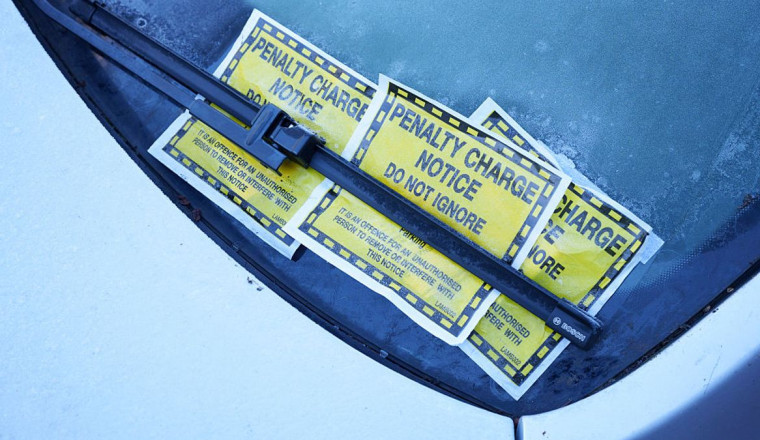

People who have been hit with a parking fine may have grounds to avoid paying the fine if they can prove they were not at fault. The process can sometimes be new to drivers, especially those trying to prove their innocence, but experts have a template of exactly what to say.
Drivers accused of breaking the rules in a car park may be able to prove that their Penalty Charge Notice (PCN) was issued in error. There are many scenarios in which people end up facing these fines, such as overstaying in a car park, leaving a car in a permit-only zone, not parking properly within a single bay, or wrongly using spaces reserved for specific people, such as disabled bays (without a Blue Badge) or taxi ranks.
But while these civil tickets don't go on your criminal record or add points to your license, they can be a pain and can cost up to £160 in some parts of the UK. It can be even more frustrating to get these demands if you know you're not in the wrong at all.
The team at consumer rights champion Which? claimed there is a simple way to put your point across without losing sight of what you really want - for the PCN decision to be cancelled. Below, Which? experts have outlined exactly what to put in an email to dispute the charge.
Some sections require specific information about the circumstances that led to the parking ticket being issued. This may be found in the PCN issued to you, such as the official reason for the charge being requested.
I am writing to formally challenge the above Penalty Charge Notice. On [date], my vehicle [registration number] was issued a Penalty Charge Notice for [offence code and official reason stated on PCN].
In accordance with the Traffic Management Act 2004, my challenge is on the basis that the contravention did not occur [reasons why]. Please find enclosed evidence to this effect, in the form of [give details and why it backs up your case].
For this reason, I look forward to receiving notification that the Penalty Charge Notice has been cancelled within 28 days.
Yours faithfully, [Your signature].
People can dispute the PCN online via the council’s website or by sending it to the address provided on the back of the PCN. For private parking, the appeals process is different and always listed on the ticket, or appeal to POPLA or IAS if rejected
What kind of evidence should I submit?
It's not enough to simply say the PCN is wrong and you won't be paying. Drivers need to submit evidence that supports their argument that the charge should not have been issued in the first place.
One common way to prove that you have paid to park in a car or for the correct amount of time is to share a valid pay-and-display ticket. If you don't have this, it is generally accepted to show screen grabs from a parking app (if paying digitally) or bank statements showing payment for the correct time and location.
If people need to prove that signage was misleading or unclear, go back to the area and gather evidence. Photos or videos showing signs that are missing or obscured are usually the best bet (e.g., by overgrown trees or graffiti covering vital information).
If people have been accused of parking outside the lines of a bay, check and document that the road markings were faded or misleading. People might be accused of a parking violation they did not commit, and this can happen for several reasons.
In some cases, digital systems can misrecognise certain numbers or letters on a plate, leading to the wrong driver being accused, and others have reported being 'fined' for a car they have recently sold or purchased. Keeping documents that prove you did not own the car at the time of the offence can include receipts and DVLA records that show when ownership was officially transferred to your name.