
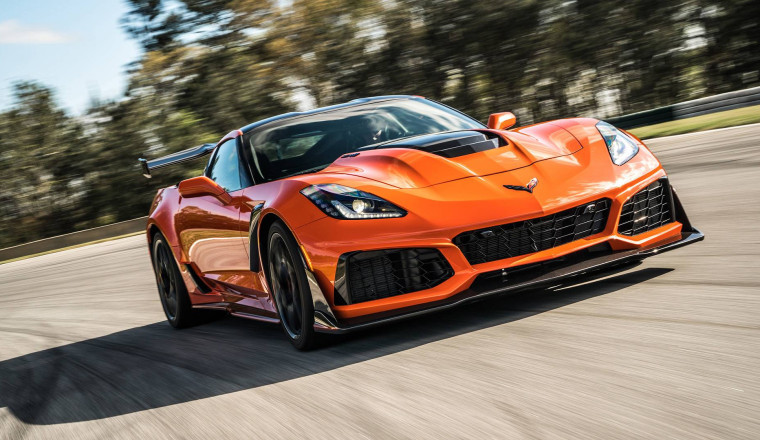

The Chevrolet Corvette ZR1 has achieved something remarkable in automotive engineering: it's so aerodynamically effective that it damages its own paint job. Multiple owners have reported paint chipping and damage when pushing their 755-horsepower supercars beyond 180 mph, with General Motors now covering repair costs under warranty for what might be the most expensive first-world problem in motoring.
The culprit is the ZR1's aggressive aerodynamics package, designed to generate massive downforce at high speeds. The rear wing alone can produce up to 950 pounds of downforce when the car reaches its 212 mph top speed, creating air pressure so intense that paint literally begins peeling away from body panels. The irony is perfect: the very engineering that makes the ZR1 capable of sustained high-speed track work is also destroying the car's finish.
According to reports from The Drive, the damage typically occurs around the rear deck lid and wing mounting points, where the extreme aerodynamic forces are most concentrated. One owner discovered their rear wing had created so much downforce that it damaged the surrounding paint during a high-speed run. The front splitter, another aerodynamic component designed to manage airflow, has also been linked to paint damage issues.
Track day enthusiasts have been the first to discover these problems, with incidents reported at venues including Road America and Laguna Seca. For owners who actually use their ZR1s as intended, reaching speeds where the aerodynamics package truly functions, the paint damage represents an unexpected consequence of authentic supercar performance.
Like this? Get the app: iOS | Android
The financial impact is substantial. Complete rear deck repaints can exceed $5,000 at authorized Chevrolet service centers, making GM's decision to cover these repairs under warranty particularly significant. The company's willingness to absorb these costs suggests they recognize the legitimacy of using a track-focused supercar at the speeds for which it was designed.
This situation exposes a fundamental challenge in supercar development: building a car capable of extreme performance while maintaining the aesthetic standards expected at the ZR1's price point. Engineers must balance maximum aerodynamic efficiency against paint durability, two goals that apparently conflict at the outer edges of performance.
The ZR1's paint chipping problem joins a distinguished list of high-performance automotive quirks, from Ferrari F40s whose panels would warp in heat to McLaren F1s whose gold-lined engine bays would literally cook electronics. These issues become badges of honor among enthusiasts, proof that their cars push genuine boundaries rather than existing as rolling sculptures.
For ZR1 owners, the paint damage has become an unexpected mark of distinction. In a world where many supercars never see speeds above highway limits, chipped paint from extreme downforce proves you've actually used your quarter-million-dollar investment as Chevrolet intended. GM's warranty coverage ensures that pushing the limits doesn't come with additional financial penalties.
The solution may require rethinking paint formulations for extreme aerodynamic applications, or accepting that cars designed for 200 mph operation will show evidence of that capability. Either way, the ZR1 has achieved something unique: it's literally too fast for its own good.
Sources: The Drive