
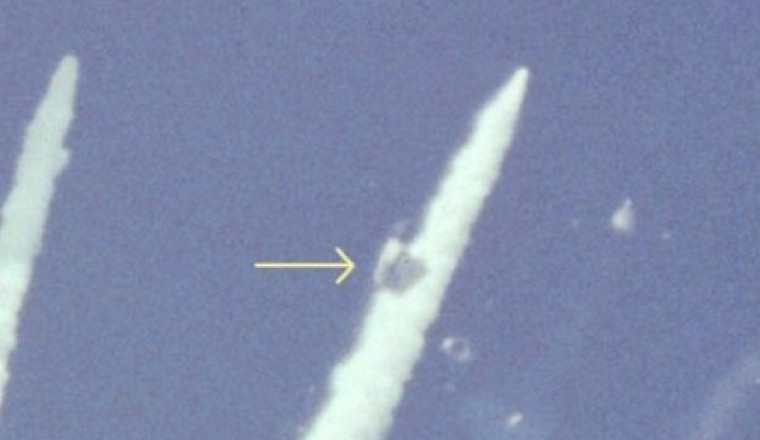

The Space Shuttle Challenger didn't kill its crew when it broke apart 73 seconds after launch on January 28, 1986. That horrible distinction belongs to the Atlantic Ocean, which received the intact crew cabin traveling at over 200 mph after a nearly three minute fall that NASA engineers could only watch in stunned silence.
For decades, the public believed the seven astronauts died instantly when Challenger exploded in a fireball above Cape Canaveral. The Rogers Commission investigation revealed a far more disturbing truth. The crew cabin separated cleanly from the disintegrating orbiter and remained pressurized during its 65,000 foot descent. Inside that cabin, at least some of the crew fought desperately to save themselves.
Pilot Michael Smith activated multiple emergency electrical switches after the breakup, moving them from their launch positions in what investigators concluded was an attempt to restore power. The evidence suggests Smith remained conscious and functioning as the cabin plummeted toward the ocean. Even more haunting, at least three crew members manually activated their Personal Egress Air Packs, emergency oxygen systems that required deliberate action to engage.
The oxygen consumption patterns from these PEAPs told investigators everything they needed to know about those final minutes. The usage was entirely consistent with conscious crew members breathing during the two minutes and 45 seconds it took for the cabin to fall from breakup altitude to water impact. They were awake. They knew what was happening.
Recovery divers who found the cabin 73 days later on the ocean floor confirmed what flight data had already suggested. The crew compartment showed no signs of explosion damage or rapid decompression. It had survived the initial breakup completely intact, maintaining its structural integrity throughout the fall. Only the catastrophic impact with the Atlantic at over 200 mph finally destroyed it.
Like this? Get the app: iOS | Android
The question that haunts aerospace engineers to this day is whether anything could have saved them. The cabin had no parachute system, no emergency separation rockets, no flotation devices, and no distress beacon. NASA had never designed the crew compartment for independent survival. The shuttle program assumed that any accident severe enough to separate the cabin would kill the crew instantly.
That assumption proved tragically wrong. The technology to recover a falling crew cabin from 65,000 feet simply didn't exist in 1986. Military aircraft had ejection seats, but nothing could pluck a multi-ton crew compartment from the sky. The cabin fell over open ocean, far from any rescue vessels that might have attempted a recovery even if the impact had been survivable.
Modern spacecraft design reflects the lessons learned from Challenger's crew cabin. SpaceX Dragon capsules and Boeing Starliner both feature robust abort systems that can separate the crew compartment from a failing rocket and land safely under parachutes. These systems exist because seven astronauts spent nearly three minutes falling toward certain death while NASA watched helplessly from the ground.
The Rogers Commission concluded that the crew died from trauma sustained during water impact, not from the initial breakup or loss of consciousness during the fall. For the families of Challenger's crew, this finding brought both comfort and additional grief. Their loved ones hadn't suffered through an explosion, but they had endured those final terrifying minutes knowing exactly what awaited them in the cold Atlantic waters below.
NASA still studies the Challenger accident as a reminder that space travel demands redundant safety systems for every conceivable failure mode. The crew cabin that fell intact from 65,000 feet changed how engineers think about spacecraft design. No one should ever again face those helpless final minutes that Challenger's crew endured on a January morning when the shuttle program's invincibility myth died along with seven astronauts.
Sources: NASA Rogers Commission Report on the Space Shuttle Challenger Accident, NASA Historical Reference Collection