
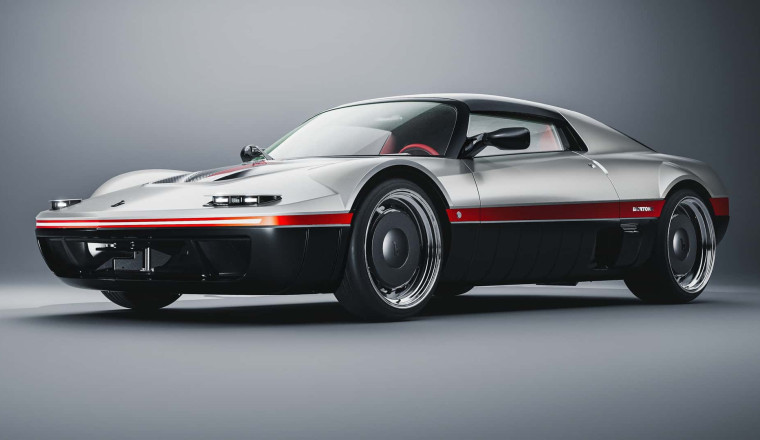

Bertone represents one of the most significant names in automotive design history. The company shaped dozens of iconic vehicles across seven decades, from the Lamborghini Miura to the Lancia Stratos. After financial collapse in 2014, the brand disappeared from active production. Now, a decade later, Bertone has emerged with the GB110, a retro-inspired sports car that draws explicitly from the company's archive while attempting to establish relevance in the modern performance landscape.
The GB110 designation references both Giorgetto Bertone and Nuccio Bertone, the father and son who led the company through its most influential period. The number 110 marks what would have been Nuccio's 110th birthday. This vehicle serves as both tribute and statement of intent from the reconstituted operation, now based in Grugliasco near Turin.
Design Language: Mining the Archives
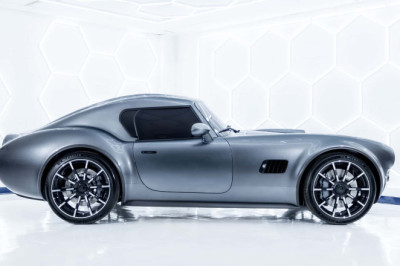
The styling borrows heavily from specific Bertone creations, particularly the 1970 Lancia Stratos Zero and various wedge-profile concepts from the late 1960s and early 1970s. Chief designer Mauro Conceprio has incorporated the sharp angles and geometric forms characteristic of that era, though translated through contemporary manufacturing techniques and regulatory requirements.
The front fascia features a low bonnet line with pop-up headlamps, a feature almost entirely absent from modern production cars due to pedestrian impact regulations. Bertone has secured exemption through limited production status and specific market targeting. The windscreen angle sits at just 18 degrees from horizontal, creating an extremely shallow glasshouse that prioritizes visual drama over interior volume.
Side profile shows classic wedge proportions with a rising beltline and falling roofline converging toward the rear. The door cuts extend deep into the roof, a styling cue taken directly from the Stratos Zero. Twenty-inch wheels sit within aggressively flared arches, with minimal gap between tire and bodywork. Overall length measures 4,640mm, width extends to 2,040mm, while height compresses to just 1,150mm.
The rear treatment incorporates a Kamm tail with vertical glass panel and horizontal LED light bar. An integrated diffuser channels airflow from beneath the flat floor, generating claimed downforce figures of 180kg at 250 km/h. Active aerodynamic elements include a deployable rear wing and adjustable front splitter, both controlled through drive mode selection.
The Alfa Romeo Connection
Power comes from the same twin-turbocharged 2.9-liter V6 engine used in various Alfa Romeo and Maserati applications. In the GB110, output reaches 550 horsepower at 6,500 rpm with 600 Nm of torque available from 2,500 rpm. This represents a moderate increase over standard Giulia Quadrifoglio specification, achieved through revised turbocharger mapping and less restrictive exhaust routing.
The engine architecture descends from Ferrari's modular V6 and V8 family, sharing the 90-degree bank angle and individual throttle bodies. Two IHI turbochargers operate in parallel, each feeding one cylinder bank. The compression ratio remains at 9.3:1, unchanged from Alfa Romeo specification. Redline sits at 7,000 rpm, though peak power arrives 500 rpm earlier.
According to Motor Trend, the exhaust note "combines Italian character with modern turbocharged delivery, producing a muscular baritone under acceleration that evolves into a harder-edged wail approaching redline." The exhaust system uses titanium construction with electronically controlled valves, allowing driver adjustment between subdued and track-oriented sound profiles.
Transmission choice centers on an eight-speed dual-clutch unit sourced from ZF. This gearbox already appears in numerous high-performance applications and provides shift speeds under 100 milliseconds in Race mode. Drive routes exclusively to the rear wheels through a mechanical limited-slip differential with 45 percent lock under acceleration.
Chassis Engineering: Carbon and Double Wishbones
The GB110 employs a carbon fiber monocoque constructed by Dallara, the Italian engineering firm known for motorsport chassis development. This structure weighs just 110 kilograms while providing torsional rigidity exceeding 40,000 Nm per degree. Front and rear subframes bolt to the monocoque, carrying suspension components and drivetrain elements.
Suspension geometry uses double wishbones at all four corners, with pushrod actuation and coilover dampers. Spring rates and damper valving were developed at Nardò technical center, with testing conducted across various European circuits. The setup can be adjusted manually through 32 compression and rebound settings per corner, though Bertone provides four preset configurations for road, sport, track, and wet conditions.
Steering operates through an electromechanical rack with variable assistance mapping. The ratio adjusts from 12:1 to 8:1 depending on vehicle speed and selected drive mode. Autocar noted during early prototype testing that "initial turn-in response felt sharp without becoming nervous, though the variable assistance still requires calibration refinement before production."
Braking hardware consists of Brembo carbon-ceramic discs measuring 398mm front and 380mm rear, gripped by six-piston calipers forward and four-piston units aft. The brake-by-wire system incorporates regenerative capability despite the lack of hybrid assistance, using the transmission and engine compression to reduce brake temperatures during extended circuit use.
Weight Distribution and Performance Claims
Dry weight reaches 1,450 kilograms, with distribution measuring 47 percent front, 53 percent rear. This figure places the GB110 considerably above the lightweight extremes represented by manufacturers like Donkervoort, though below the mass carried by most modern supercars. A McLaren 720S weighs roughly 1,280kg dry, while a Ferrari 296 GTB approaches 1,470kg.
Bertone claims acceleration from standstill to 100 km/h in 3.3 seconds, with 200 km/h arriving in 9.8 seconds. Maximum velocity reaches 340 km/h, limited by aerodynamic considerations rather than powertrain capability. Lateral acceleration potential sits at 1.3g, measured on Pirelli P Zero Trofeo R semi-slick tires sized 255/35 ZR20 front and 315/30 ZR20 rear.
Fuel consumption and emissions data have not been published, though the GB110 falls outside standard testing requirements due to its limited production classification. Range from the 65-liter fuel tank likely sits around 400 kilometers under mixed driving conditions, based on the engine's existing applications.
Interior Treatment: Minimalist Approach
The cabin prioritizes driver focus through deliberately sparse equipment levels. Two carbon-shelled racing seats mount directly to the monocoque, with fore-aft adjustment via seat rails rather than multiple electric motors. Alcantara covers most touch surfaces, including the steering wheel, gear selector, and door cards. Exposed carbon fiber appears throughout the interior structure.
The dashboard incorporates a 12.3-inch digital instrument cluster and central 10.25-inch touchscreen managing infotainment and vehicle settings. Climate control operates through a separate panel with physical switches and rotary dials. There are no traditional door handles; exit requires pulling fabric loops mounted to the door cards.
Storage space remains minimal. A small compartment behind the seats accommodates soft luggage totaling approximately 100 liters. The front trunk provides another 80 liters, sufficient for helmets and weekend bags but inadequate for extended touring. Bertone positions the GB110 as a weekend sports car rather than a grand tourer, and the packaging reflects these priorities.
Sound insulation receives limited attention. Engine noise transmits clearly into the cabin, as does road surface texture and wind rush above 120 km/h. Evo magazine observed that "occupants should expect conversation to become difficult at motorway speeds, though this aligns with the car's track-focused character."
Production Reality and Market Position
Bertone plans to manufacture just 33 examples of the GB110, priced at €1.8 million before local taxes. This positions the car among limited-edition exotics from established manufacturers, though the Bertone name carries different weight in 2025 than it did during the company's design heyday.
The target market consists primarily of collectors drawn to Italian automotive heritage and investors speculating on future appreciation. Several early buyers already own significant car collections and view the GB110 as both driving machine and art object. Production takes place at a dedicated facility in Turin, with each car requiring approximately 12 weeks to complete once customer specification has been finalized.
Customer deliveries began in late 2024, with the production run expected to conclude by the end of 2026. The company has stated no plans for additional variants or increased production numbers, maintaining exclusivity as a core brand attribute.
The Broader Question: Design House as Manufacturer
The GB110 represents an unusual business model. Bertone built its reputation creating designs for other manufacturers rather than producing vehicles under its own name. The transition from design consultant to low-volume manufacturer requires entirely different capabilities, from homologation knowledge to aftersales support networks.
Whether this approach proves sustainable remains unclear. Other design houses have attempted similar ventures with mixed results. Zagato produces limited runs of coachbuilt specials but typically partners with existing manufacturers for mechanical components and certification. Pininfarina established Automobili Pininfarina to build electric hypercars, though early sales have progressed slowly despite significant investment from Mahindra.
The advantage Bertone brings centers on brand recognition and historical significance. The name carries weight among collectors and enthusiasts, particularly those who remember the company's influence during the 1960s and 1970s. Whether this translates to commercial success at the €1.8 million price point will determine if additional models follow.
Technical Execution: Promise and Reality
Early driving impressions suggest the GB110 delivers competent rather than exceptional dynamics. The Alfa Romeo powertrain provides strong performance and characterful delivery, though the engine appears in numerous other applications without exclusivity. The carbon monocoque and suspension geometry demonstrate serious engineering intent, yet initial testing reveals areas requiring further development.
Road & Track noted that "the driving position felt slightly compromised, with the steering wheel mounted too high and the pedal box angled awkwardly for taller drivers." These ergonomic concerns often plague low-volume manufacturers lacking the development resources and testing time available to larger operations.
The question facing potential buyers centers on whether the GB110 offers sufficient differentiation to justify its asking price and limited production status. The car provides visual drama and historical connection, though objective performance falls short of similarly priced alternatives from established manufacturers. For those prioritizing exclusivity and design lineage over lap times and everyday usability, the equation may still balance favorably.