
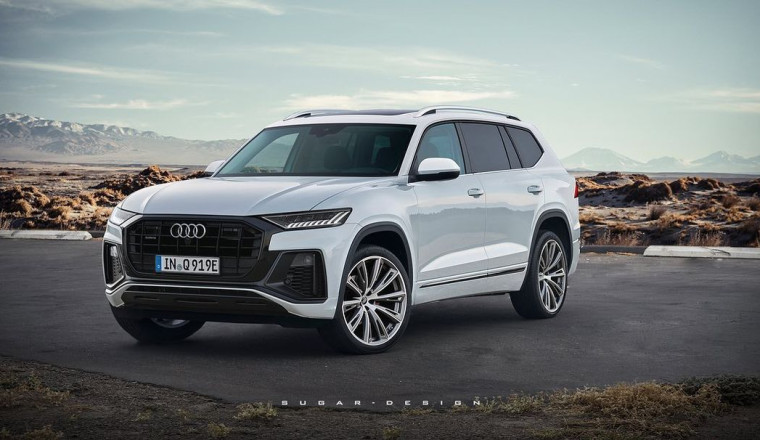

Industry whispers about Audi replacing its flagship A8 sedan with a massive Q9 SUV have been making rounds, but these rumors highlight something more revealing than any single model announcement. The luxury car world has already moved past the sedan versus SUV debate. It's over, and the SUV won.
The speculation about a Q9 flagship stems from broader industry trends rather than any confirmed Audi announcement. No official statement from Audi AG has declared the A8 dead or confirmed Q9 production. Yet the rumor persists because it feels inevitable. When BMW can charge $130,000 for an X7, and Mercedes moves 50,000 GLS units annually while the S-Class struggles to hit those numbers globally, the writing appears clear.
Audi's current flagship strategy actually tells the real story. The Q8, launched in 2018, already serves as the brand's SUV flagship, while the A8 L continues as the sedan flagship. But look at the investment and marketing focus. The Q8 gets the aggressive styling updates, the performance variants, and the prominent placement in Audi's advertising. The A8 gets competent updates and quiet respectability.
Sales figures explain the attention shift. Luxury SUV segments have grown 40 percent over the past five years while full-size luxury sedans have contracted by 25 percent across major markets. Audi sold roughly 23,000 A8 units globally in 2023, while moving over 85,000 Q8 and Q8 e-tron units combined. The math doesn't require an MBA to decode.
Industry observers at GaukMotorBuzz.com have tracked this transformation across multiple luxury brands. Genesis discontinued the G90's long-wheelbase variant in several markets. Jaguar axed the XJ entirely. Even Mercedes has redirected flagship investment toward the EQS SUV rather than the traditional S-Class.
Like this? Get the app: iOS | Android
The Q9 rumors gained traction partly because Audi executives have hinted at expanding their SUV range upward. Recent statements about developing more "rugged" SUV offerings suggest internal discussions about positioning above the current Q8. But flagship replacement represents different strategy than lineup expansion.
What makes the A8 situation particularly complex is Audi's electrification timeline. The current D5 generation A8 launched in 2017, putting it near the end of its typical lifecycle. Any replacement decision must account for platform costs, electrification requirements, and market demand projections through 2030. Developing a new flagship sedan platform for a shrinking market segment makes little financial sense.
Yet completely abandoning the sedan flagship carries risks. Corporate customers still prefer sedans for executive transport. Chauffeur services find sedans easier to enter and exit gracefully. Some markets, particularly in Asia and the Middle East, maintain strong sedan preferences in the luxury segment.
The more likely scenario involves Audi maintaining the A8 nameplate while shifting flagship investment toward SUV development. This approach lets the company serve existing sedan customers without major new platform investment. Meanwhile, any hypothetical Q9 would target the growing ultra-luxury SUV segment where Bentley Bentayga and Rolls-Royce Cullinan operate.
The real story isn't whether Audi replaces the A8 with a Q9. The real story is that luxury buyers have already made that choice themselves, one purchase at a time, until the sedan became the exception rather than the rule.
Sources: Industry sales data from multiple automotive research firms; no official Audi statements confirmed regarding A8 discontinuation or Q9 production plans.