
There is 'no end in sight' to rising fuel prices with the war in Iran already costing drivers an estimated £307million in additional petrol and diesel bills, according to calculations.
But as forecourt prices continue to increase this week, retailers have reiterated that fuel supplies remain 'stable' as they rejected claims that they have been profiteering and 'price gouging' off the back of escalating oil prices.
After a year of crude oil trading at around $60 to $70 a barrel, this month's conflict in the Middle East - notably Tehran's blockading of the Strait of Hormuz, the key transportation waterway for around 20 per cent of the world's oil supplies - has seen prices almost double, peaking as high as $120.
But even with prices easing to just above $100 in recent days off the back of Trump's claims that an agreement to end hostilities with Iran could be near, motorists are being warned that the cost to fill up will still continue to rise in coming weeks.
The average price of petrol in the UK has increased by almost 12 per cent since the first attacks on Iran on February 28, with the cost of a litre jumping by almost 16p to 148.6p. This is the highest unleaded has been since July 2024, according to figures shared by the RAC.
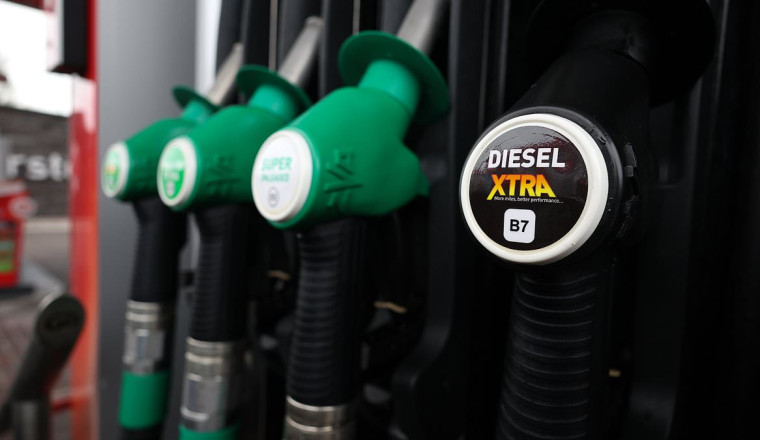
Diesel has surged more dramatically to a three-year spike, up 22 per cent in less than four weeks, with 31.5p added to the average price, which on Tuesday peaked at 173.8p.
But a more prominent acceleration in the wholesale cost of the fuel has seen average retailer margins on diesel fall into the negative.

The war in Iran has already cost drivers in Britain an estimated £307million in additional petrol and diesel bills, according to calculations
The RAC Foundation has estimated that drivers have spent in the region of £4.574billion at forecourts since 28 February.
This compares with £4.267billion they would have paid if prices had remained broadly the same as they were before the war - a £307million addition to fuel bills.
But analysis of wholesale prices - what the retail sector pays for fuel - shows they are accelerating faster than what's charged at the pump, with wholesale unleaded prices soaring by as much as 21 per cent, while wholesale diesel has rocketed by a massive 40 per cent.
This is because the UK imports the vast majority of diesel - leaving it more exposed - while most petrol is refined domestically.
As such, retailer margins - which were around 8.5 per cent on every litre of fuel a year ago - have contracted to around 5 per cent on petrol, while rocketing wholesale diesel costs have seen the retail margins on the fuel plummet into the red.
In comparison, taxes continue to make up around half of what drivers pay at the pumps.
Some 53 per cent of a litre of petrol is fuel duty and VAT - around 79p on every litre.
For diesel, higher wholesale pricing means taxes represent slightly less of the overall cost at 47 per cent. Yet, this is still 82p for every litre going to Treasury coffers.
Fuel retailers refute 'price gouging' claims
Continuous rising pump prices come just over a week after fuel retail execs were summoned to 11 Downing Street for crisis talks with the Government over suggestions they had been 'ripping off' motorists with hiked fuel prices during the oil crisis.
At the meeting on March 13, Chancellor Rachel Reeves and the Secretary of State for Energy Security and Net Zero, Ed Miliband, warned bosses from forecourt operators and firms including Asda, BP, ExxonMobil and Shell that the Government would not tolerate 'unfair practices' and would 'ensure the consumers are treated fairly during the crisis'.
But the Petrol Retailers Association (PRA), which represents the bulk of forecourts across the country, refuted the accusations and said 'inflammatory language' used by ministers in the weeks ahead of the meeting had led to attacks on petrol station staff by angry drivers.
Sponsored
The £40,000 electric family SUV that can charge in just 12 minutes

Gordon Balmer, the PRA's executive director, told us that 'some forecourts are not making anything on fuel at the moment' amidst a warning that pump prices will 'continue to rise' as retailers buy unleaded and diesel stock over the coming weeks.
He pointed to how different retailers buy fuel typically leaves smaller petrol station operators more vulnerable to surging costs.
Supermarket and oil company retailers commonly purchase stock in advance and in bulk at a lower rate, meaning rising wholesale costs filter through to the pumps more gradually.
However, smaller independent petrol stations pay a 'daily spot price', meaning they pay for fuel at the live market price, leaving them more open to the surging price of oil.
As such, operators of smaller businesses are often left little option but to implement large price increases or slash margins to remain competitive against bigger local forecourts.
Balmer said: 'Our members are endeavouring to price fuel fairly and competitively under difficult circumstances. We have lobbied the government to abandon their plans to increase fuel duty starting in September, to assist struggling households.
'For those motorists keen to look for the best deal in their area, we suggest they download the app PetrolPrices.com to find the lowest prices.'
He also called on ministers to increase support for smaller operators who face rising business rates in the new financial year.
'Fuel prices are all over the place,' says AA president
The AA said drivers are now seeing huge price differences at filling stations within a stone's throw of each other.
Analysis by the AA found that an independent garage in Warrington was charging 177p litre for diesel on Tuesday while a Morrisons forecourt less than a mile away was selling the fuel for 159p.
But it too found evidence of significantly varying local prices between major retailers.
On the A303 in Popham, Hampshire, a BP station on the westbound carriageway was charging 147.9 for petrol while an Esso across the road eastbound had unleaded at 158.9 - an 11p difference.
In Reading, it found three BP garages within a mile radius charging 145.9p, 146.9p and 149.9p for petrol - a total difference of 4p a litre.
Edmund King, AA president, says fuel prices 'are now all over the place'.
He told us that some larger forecourts are 'hiking prices under the cover of depressing global news,' while some independent garages were trying to keep prices down.
'We also understand prices in deep rural areas will be more expensive as they have lower turnover and are often a lifeline for the local community,' he added.
In general, supermarkets remain the cheapest places to fill up. Records show that supermarket unleaded was around 6p a litre cheaper than major fuel suppliers last week, and around 7p a litre less than independents.
Read More
Ten ways you can mitigate rising petrol prices as Iran war threatens to send fuel bills rocketing

With prices still on the rise, the RAC says that diesel is now on course to break the 180p-a-litre mark in the next week or so, and if it goes on to reach 182p the price of a tank for a family car would breach £100.
'If petrol climbs to 150p, as seems inevitable, it will take the cost of a fill-up to £82.50,' its head of policy Simon Williams said.
Despite the forecast increases, prices will still be short of the all-time record seen in July 2022, when petrol soared to 191.5p and diesel to 199p in response to Russia's invasion of Ukraine.
Putin's war had triggered the Tory Government in March that year to introduce the 'temporary' 5p-a-litre fuel duty cut to help struggling households - a cut that Ms Reeves wants to wipe out with three successive increases between September 2026 and March 2027.
This is despite her recent calls for the fuel sector to treat motorists fairly.

Average fuel pricing data from last week shows the UK having the 18th highest petrol prices and 15th most expensive diesel prices. That said, Britons face higher taxation on fuels than most EU nations, suggesting EU retailers are taking bigger margins than those in the UK
Even with the duty cut in place, UK drivers pay some of the highest taxes on petrol across Europe - and the highest levy on diesel.
Yet the overall price of a litre of unleaded last week was only the 18th highest among 28 European nations, while UK diesel prices were 15th overall, suggesting retailers in the EU are hiking their costs more substantially.
Steve Gooding, director of the RAC Foundation, told us: 'It is easy for the Chancellor to point the finger at petrol and diesel retailers and raise the issue of price gouging but the data suggests the UK has, overall, a pretty competitive fuel market, especially if you compare what we pay at the pumps with what many Europeans do.
'It's worth remembering that even with the elevated price of oil, half of what is paid on the forecourts goes to the Exchequer in tax, something ministers might have in mind when confronting the cost of living challenge.'
When we contacted the Treasury, it told us that a rapid de-escalation in the Middle East remains the best way to keep pump prices low, but the Government will also take the necessary decisions to help families with the cost of living and protect the public finances.
It also pointed to Sir Keir Starmer's comments to the Liaison Committee on Monday, with the Prime Minister stating: 'Obviously, fuel duty is held until September. We've been working intensively in the last week or two with fuel suppliers, particularly petrol retailers, to make sure that nobody but nobody is profiteering from this.
'And that's why we've said to the CMA they've got to be all over any price gouging, any attempts to make money.'
The Road Haulage Association (RHA) has called the government's reluctance to delay the fuel duty increase as a 'missed opportunity to ease pain for many businesses', with commercial fleet operators responsible for moving 80 per cent of all goods in this country facing soaring fuel costs.
RHA managing director, Richard Smith, said: 'Our essential industry is a key economic enabler. That is why we have been calling for the planned fuel duty rise to be scrapped, along with any link to future inflation rises. Such a rise would be a hammer blow for many firms.'

This week, Slovenia became the first country to introduce a ration on petrol and diesel. Pictured: a filling station in Ljubljana
Don't change driving and fuelling habits, ministers urge
Since the war, motoring organisations have called on people to be savvy and use smartphone apps to shop around for the cheapest local fuel and adjust their driving style to conserve petrol and diesel.
However, energy minister Michael Shanks this week insisted that motorists should not drive slower or change their fuel buying habits because of the Iran oil crisis.
It comes after the International Energy Agency (IEA) advised motorists across the world to reduce their speed on highways, share rides and work from home when possible to reduce how much fuel they use.
But governments have been taking action too this week.
Slovenia became the first country to introduce a ration on petrol and diesel. Until further notice, motorists are restricted to a maximum purchase of 50 litres of fuel per day in the country.
In South Korea, drivers of combustion engine cars are banned from driving for one day a week under new rules introduced on Tuesday.
But Mr Shanks told Times Radio that UK drivers 'should do everything as absolutely normal because there is no shortage of fuel anywhere in the country at the moment'.
He said: 'We monitor this every single day, I look at the numbers personally. There's no issue at all with that.'
Last month, the government announced the launch of its Fuel Finder scheme, which requires retailers to report all changes to fuel prices across forecourts nationwide within half an hour of increasing or reducing them to bolster transparency for drivers.
While the data is held in a single database, motorists, organisations and developers have free access to the information, which they be incorporated into live fuel price mapping applications.
Save on services and MOTs - and keep track of your car's documents
The This is Money Motoring Club is designed to make car ownership cheaper and simpler for This is Money and Daily Mail readers.
Powered by MotorEasy it's the place to keep on top of tax, MOTs and servicing - and manage the important documents and receipts that boost your car’s value.
You can also save money on maintenance and repairs - and book into one of 10,000 trusted workshops nationwide.
New members receive a £20 reward voucher, which you can put towards repairs or even a warranty - giving you peace of mind that if something goes wrong, you won’t be left footing the bill.
You can even get £20 off an MOT with one of MotorEasy's listed providers.
> Find out more about the This is Money Motoring Club
Context:
Iran war has already cost UK drivers £307M extra as fuel prices surge 12-22% since February.
Context:
Rising oil prices expose UK's diesel import dependency and vulnerability to Middle East conflicts.
Context:
Wholesale fuel costs are rising faster than pump prices, squeezing retailer margins into negative territory.