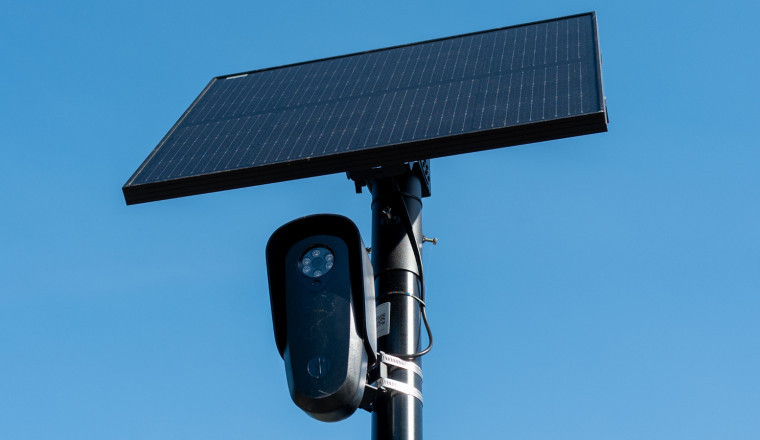

The Troy Police Department began a pilot programme of Flock Safety automated licence plate reader cameras in 2021, later expanding to 26 devices across the city. Flock cameras go well beyond reading plates. Depending on the model, they can identify a vehicle's make, model, colour, bodywork damage, roof racks, window stickers and miscellaneous contents. They feed into a national database operated by Flock Safety, a company whose technology is now deployed in more than 4,000 communities across the United States. The Troy police department did not inform the city council it was doing any of this. Residents found out through their own observation and organised protests at City Hall in March 2026.
The political situation made things combustible. Troy has a Republican mayor, Carmella Mantello, and a city council composed entirely of Democrats, led by President Sue Steele. On 19 March, the council held a public forum at which more than two dozen residents spoke in opposition. The council tabled a resolution to extend the Flock contract, citing unresolved questions about privacy, data handling, and the legality of the original procurement. Under Troy's city charter, council approval is required for expenditures over $35,000. The Flock contract costs $156,000 across two years. The council's position was that no valid contract existed because the council had never authorised one.
Troy's deputy police chief, Steven Barker, told reporters the department had followed standard procurement procedure. He said the cameras are used in almost every investigation the detective bureau pursues and had contributed to solving two homicides. Data collected is deleted after 30 days, and the department had already paused its participation in Flock's national database following the public outcry in March.
Mayor Mantello's response to the council's move to withhold payment was to declare a public safety emergency on 1 April, using powers under the city charter that allow a mayor to summon and employ additional resources for protective measures during an emergency. The council's position was that no emergency conditions existed and that the declaration was a violation of the charter in its own right.
"The mayor cannot unilaterally spend taxpayer dollars using a state of emergency declaration when no such conditions exist. This is a direct violation of the city charter, and a disappointing step in the wrong direction."
The council sued Mantello over the declaration. Mantello maintained that the council was holding public safety hostage.
"When those decisions are used as leverage and funding for critical safety infrastructure is withheld to make a political point, that's effectively holding public safety hostage."
Like this? Get the app: iOS | Android
As of 20 May 2026, a partial compromise has emerged. Troy has implemented a set of guardrails around the cameras including an annual audit of data collected by Flock, restrictions on data sharing to within agencies on a case by case basis, and the introduction of Local Law 3, an ordinance brought by Councilmember Nancy McKee that codifies several of the new policies. Council President Steele described the compromise as a step toward addressing privacy and safety concerns while the broader dispute continues.
The broader dispute continues because the underlying questions have not been resolved. Flock Safety's cameras are deployed in thousands of American cities, and the pattern in Troy — installation without public consultation, contract renewal without council authorisation, executive override when the legislature objects — is not unique to Troy. The cameras have been used elsewhere for immigration enforcement, for tracking individuals making medical appointments across state lines, and for building movement profiles on people who have committed no crime. In Troy, a man was tracked 526 times without any record of why.
Surveillance infrastructure rarely gets dismantled once it is in place. The compromise reached in Troy this week is guardrails on a system that exists because nobody asked the public whether they wanted it.
For more on how automated surveillance is reshaping enforcement and civil liberties, see GaukMotorBuzz's ongoing coverage at gaukmotorbuzz.com/drivers-revenge.
Sources
- WAMC (Northeast Public Radio) — Troy mayor declares public safety emergency amid Flock camera debate
- WAMC — Troy officials move toward Flock cameras compromise
- Spectrum News 1 — Troy mayor declares safety emergency to keep licence plate readers operational
- CBS6 Albany — Troy mayor declares public safety emergency to keep Flock cameras operational
- The Mirror US — State of Emergency declared in NY town after police install dozens of AI cameras without permission
- Washington Post — City's AI licence plate cameras led to an uproar and a state of emergency (paywalled; facts independently verified via WAMC and Spectrum News)
- Jalopnik background — Flock Safety shady business practices
- Jalopnik — Police sued for tracking man 526 times