
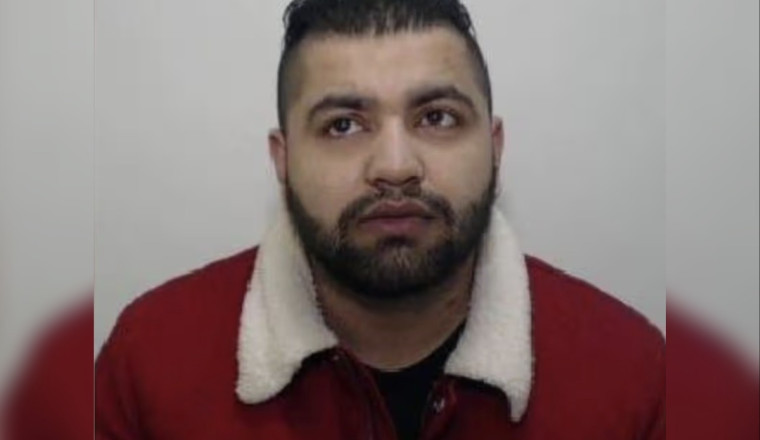

The Mansouri Cars fraud was not Fiaz's first. In February 2018, he was jailed for 56 months at Liverpool Crown Court for running SK Performance Cars in Bolton, a used car brokerage that defrauded 21 victims of just over £500,000. While that business was under investigation he started a new operation. Mansouri Cars (BG) Ltd ran from a converted warehouse in Birchwood, Warrington from April 2016. It was still taking in cars and money while Fiaz was being prosecuted for the Bolton fraud. The overlap is not incidental. It is the shape of the man.
Mansouri operated on a sale or return basis. Sellers, typically private individuals with high value cars, were told the company would valet and photograph their vehicles professionally, insure them on a secure private site, and attempt to sell them above a fixed price. Any profit above the agreed figure would belong to Mansouri. The principal would be returned when the car sold. It looked professional. The Birchwood showroom displayed expensive cars and created an impression of substance. Online reviews began warning about the company from 2017. Warrington Trading Standards opened an investigation in August 2017. The operation continued regardless, pulling in new cars and new victims as the evidence against it accumulated.
Prosecutors told Liverpool Crown Court that proceeds were frequently used to fund Fiaz's personal lifestyle rather than being returned to sellers. Customers who complained received nothing. Those who pressed harder faced intimidation. One seller, a Mr Hussain, arrived at the showroom when Mansouri failed to pay him for his Mercedes. Basil Osman, who managed customer relations, had arranged for what the prosecutor described as "stocky henchmen" to come down and intimidate him. Cars that were eventually returned had travelled excessive mileage and depreciated accordingly. Buyers were also defrauded: Mansouri was selling cars it did not own.
By the time the operation collapsed, prosecutors had identified 41 victims with confirmed losses of £720,000. The potential total exposure was up to £1.4 million.
Three co-defendants, Paul Roche, Basil Osman and Mohammed Fiaz, received suspended sentences in September 2024 for their lesser roles. Shahnawaz Fiaz failed to appear for sentencing. A warrant was issued. He was traced to Denmark, where an international arrest warrant secured his extradition back to the UK.
On 5 February 2025, Fiaz pleaded guilty to conspiracy to defraud and failure to surrender to court bail. Liverpool Crown Court sentenced him to six years and nine months.
Like this? Get the app: iOS | Android
The Court of Appeal, sitting at the Royal Courts of Justice in London, has now ruled that the sentencing judge erred when applying the principle of totality, the legal requirement that the overall sentence should reflect the totality of the offending rather than simply adding each element together. The appeal succeeded on that basis. His sentence has been reduced to six years.
Nine months off. For a second fraud operation by a man who started it while already under investigation for the first one, who used false names with his own staff to distance himself from the business, who sent intimidators to threaten people who asked for their money, who made off to Denmark when trial arrived, and whose 62 combined victims across both operations lost more than £1.2 million.
The principle of totality exists for legitimate reasons in sentencing law. It is designed to prevent disproportionate cumulative punishment. Whether the gap between six years nine months and six years represents a meaningful recalibration of proportionality, or whether it is a technical appeal mechanism delivering a result that the victims of two separate fraud conspiracies will find difficult to understand, is a question the Court of Appeal has answered in one direction. The victims are entitled to their own view.
For anyone considering a sale or return arrangement with a used car dealer, the Mansouri case is a useful checklist. Professional premises and expensive stock are not evidence of legitimacy. An insistence on keeping logbooks and keys is a standard feature of this fraud type. Reviews from existing customers are the most reliable signal. If a business promising to sell your car has a pattern of complaints online and an unwillingness to provide written contracts with clear cancellation terms, the warning is already there. Mansouri had those reviews from August 2017. The operation ran until February 2018.
Sources: Automotive Management / AM Online, March 2026 | AM Online, September 2024 | Liverpool Crown Court sentencing records, February 2025 and February 2018 | Court of Appeal, Royal Courts of Justice, March 2026 | Warrington Guardian